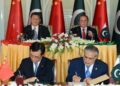

On August 11 and 12, a forum on the China-Pakistan Economic Corridor (CPEC) convened in Xinjiang, in northwestern China. According to Xinhua, the event was attended by “[m]ore than 300 officials and delegates from companies, think tanks and social organizations” from both China and Pakistan.

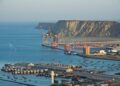
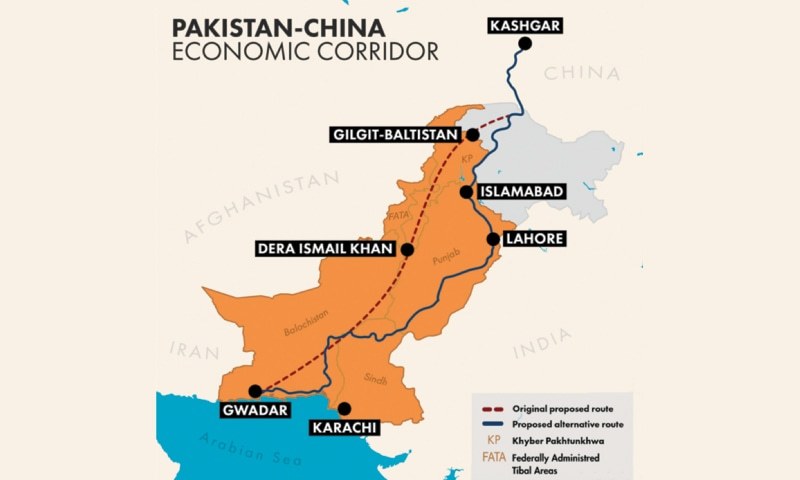
Under the CPEC, China and Pakistan plan to build infrastructure to connect Gwadar Port in Pakistan with Kashgar in Xinjiang. The project has become a “flagship project” of China’s Silk Road Economic Belt, although it was proposed in May 2013, a few months earlier than the broader economic belt. As a sign of its important place in the overall strategy, the CPEC was the first project to receive an investment from China’s $40 billion Silk Road Fund, providing partial financing for the $1.65 billion Karot hydropower project in Pakistan. Pakistani President Mamnoon Hussain predicted that the CPEC will be “a monument of the century” during his February 2014 visit to China.
The forum in Xinjiang this week ended with the issuing of the “Karamay Manifesto” on the CPEC, which “praised the significance of the Belt and Road Initiative and 21st Century Maritime Silk Road initiative for the political trust, economic cooperation and cultural exchanges of the countries along the road,” according to Xinhua.
China and Pakistan also signed 20 cooperation agreements, worth $1.6 billion, at the forum. Chinese media did not provide details on the contents of the agreements, although Xinhua mentioned general cooperation in “energy and power projects” and “education and health care.” During Chinese President Xi Jinping’s visit to Pakistan in April of this year, the two sides identified four key areas for cooperation: “Gwadar Port, energy, transport infrastructure and industrial cooperation.”
For Pakistan, the project represents an economic boost and a potential solution to an ongoing energy crisis. According to China Daily, “gas, coal and solar energy projects” — planned under the CPEC framework have the potential to double Pakistan’s current capacity.
For China, meanwhile, the project is a must if the broader Silk Road Economic Belt, with its attendant benefits for China’s domestic economy, geopolitical clout, and regional stability, is to get off the ground. Pakistan, China’s “iron brother,” will likely be Beijing’s most eager partner along the planned Silk Road. China also sees the CPEC in particular as a way to diversify its energy supply, lessening reliance on easily disrupted maritime trade routes.
Other analysts, however, point to the difficulties still facing the CPEC. For one thing, there are lingering security concerns, given unrest and insurgencies in Balochistan, the province where Gwadar is located. There are also domestic arguments in Pakistan over the exact route of the CPEC, which will determine which provinces and cities will reap the windfall of Chinese investment.
German Marshall Fund Transatlantic Fellow Andrew Small remains “cautiously optimistic” about the project. Small, author of the book The China-Pakistan Axis, notes that the security risks in Pakistan haven’t changed, but “the security and economic logic for Beijing is quite different now. With China now motivated partly by efforts to help stabilize Pakistan, and its western periphery more broadly, it’s more willing to live with the attendant security threats.”
Indeed, China and Pakistan seem to be making even more ambitious plans for the CPEC, including links to Iran. Since Iran and the P5+1 negotiating parties reached an agreement to lift economic sanctions in exchange for limits on Tehran’s nuclear program, Iran is once again open for business to the world. Neighboring Pakistan is one of many countries seeking to boost economic ties with Iran – and according to a report in The Express Tribune, many of the Pakistan-Iran links under discussion will be tied to the broader CPEC.
Robina Athar, additional secretary in Pakistan’s Ministry of Commerce, told Express Tribune that Pakistan and Iran are actively planning for a boom in trade. Pakistan plans to “set up industrial sites in the impoverished border area, especially petrochemical storage, and link the infrastructure to … the China-Pakistan Economic Corridor,” Express Tribune paraphrased her as saying.
Mobin Saulat, head of state-run Inter State Gas Systems, made similar remarks about a long-hoped-for gas pipeline connecting Iran and Pakistan. Saulat said the project had been given new life, and would be constructed as part of the broader CPEC. Prior to Xi’s April visit to Pakistan, the Wall Street Journal reported that Pakistan was seeking Chinese funding for the pipeline, which would connect the South Pars natural gas field in Iran with Gwadar port.
It’s likely that not all of the projects under discussion –whether joint China-Pakistan initiatives or more ambitious visions involving Iran — will actually come to fruition. But, as Small points out, “[E]ven a partial success would be pretty consequential.”