
Global Times: Japanese Prime Minister Sanae Takaichi started her visit to Australia on Sunday, and during a meeting with Australian Prime Minister Anthony Albanese on Monday, she promoted a “free and open Indo-Pacific” concept and pushed for deeper energy and critical minerals cooperation between the two countries.

This marked a similar approach she had taken during her visit to Vietnam from Friday to Sunday. These moves have been criticized by Chinese experts as a calculated attempt to contain China’s influence and build an exclusive regional bloc.
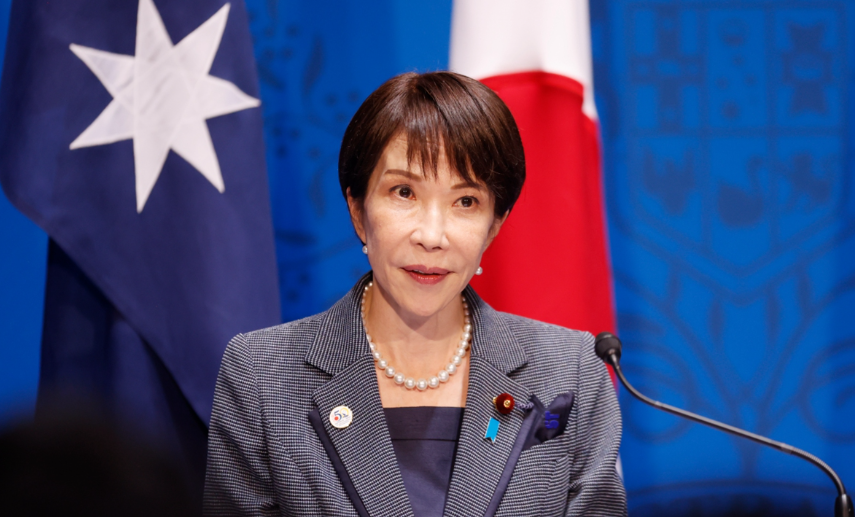
Takaichi said she hopes Japan and Australia will play a leading role in regional stability under the updated “free and open Indo-Pacific” vision during her meeting with Australian Prime Minister Anthony Albanese on Monday in Canberra, NHK reported Monday.
China, the Indo-Pacific and the conflicts in the Middle East were also discussed during Takaichi’s talks with Albanese, ABC News reported.
“Today, Anthony and I held the strategic discussions on issues beginning with China, Southeast Asia, Pacific Island countries,” Takaichi told the media in a post-talks press conference on Monday, reported News.com.au that is owned by News Corp Australia.
Takaichi has also called for strengthening frameworks such as the Quad, and described the relationship between Japan and Australia as “quasi-allies”.
“Japan’s courting of Australia is not a recent development but has long been a diplomatic priority for Tokyo,” Xiang Haoyu, a distinguished research fellow at the China Institute of International Studies, told the Global Times on Monday. He noted that with the deterioration of China-Japan relations and the risk of rare earth supply disruption, Japan is accelerating its efforts to strengthen energy cooperation with resource-rich countries such as Australia. The impact of the Middle East conflict has further driven this need. According to Xiang, broadly speaking, Japan’s moves are aimed at China, seeking to contain and counterbalance Beijing’s influence.
Similarly, in a speech at Vietnam National University, Vietnam, Takaichi’s stop before Australia, she also reaffirmed Japan’s vision of a “free and open Indo-Pacific,” a framework originally proposed by former Japanese prime minister Shinzo Abe.
“In the past, the Indo-Pacific cooperation framework was centered on the US, with Japan as just one piece,” Xiang said. Now some Western media are hyping that Japan is “moving, deliberately and at speed, to become a co-architect of Indo-Pacific order.”
Japan believes this “free and open Indo-Pacific” narrative can resonate and create strategic alignment with regional countries, incorporating various areas of cooperation – including energy, trade, critical minerals, defense equipment – into it, serving its overall strategic design, Xiang said. Facing the rising influence of China, Japan hopes to use this as leverage to counterbalance and hedge against it.
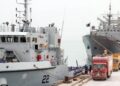
On April 18, Japan signed a $7 billion deal to supply warships to Australia, marking the most significant military sale since Tokyo lifted its ban on such exports in 2014. Moreover, Japan is weighing the supply of lethal weapons to Southeast Asian nations after revising its arms export restrictions.
Also, strengthening cooperation in energy, trade and critical minerals sits at the core of Takaichi’s recent visits to Vietnam and Australia.
In her speech at Vietnam National University, Takaichi hyped the risks of overdependence on a single country for critical supplies, a remark widely interpreted as targeting China, United Press International reported.
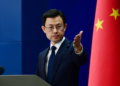
When asked to comment on Takaichi’s scheduled proposal of a new version of the so-called “free and open Indo-Pacific” during her visit to Vietnam, Chinese Foreign Ministry spokesperson Lin Jian said on Wednesday that state-to-state interactions should not target or harm the interests of third parties. Under the pretext of freedom and openness, Japan is in essence stoking bloc confrontation and forming exclusive cliques. Such practices run counter to the shared aspiration of regional countries and the international community for peace, development and cooperation, and are unpopular, Lin said.
“Japan is seizing the opportunity to break free from its postwar system, promoting the projection of its military force, exporting weapons, and strengthening overseas military cooperation,” Xiang noted.
“While vigilance is needed against Japan’s behavior in stirring up trouble and creating confrontation, we should be clear that the practical effect of these initiatives is limited. The broader ‘Indo-Pacific strategy’ is in fact on a downward trajectory. Japan is trying to exploit this situation to enhance its political, diplomatic, and military influence, trying to fill the power vacuum left by US strategic contraction in a bid to assume a leading role. Yet behind this ambition lies a profound sense of insecurity,” Xiang stressed.
He further noted that countries such as Australia are unlikely to align with Japan in confronting China.
Australia’s Minister for Foreign Affairs Penny Wong has visited China from April 28 to 30. In a meeting with Chinese Vice President on April 29, Penny Wong said that currently Australia-China relations have maintained a sound growth momentum, with steady progress in mutually beneficial cooperation, adding that Australia highly values its ties with China, the Xinhua News Agency reported.
Penny Wong’s recent visit and remarks clearly show that Canberra fully recognizes China as one of its most important, stable, and structurally complementary economic partners, Chen Hong, director of the Australian Studies Center at East China Normal University, told the Global Times.
Chen warned that the real danger lies not in normal Japan-Australia cooperation, but in militarization of their bilateral ties. For Australia, he stressed, the wisest choice is not to follow Japan’s push for military normalization or join the US-led camp confrontation, but to safeguard regional stability and preserve its own strategic autonomy.