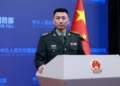

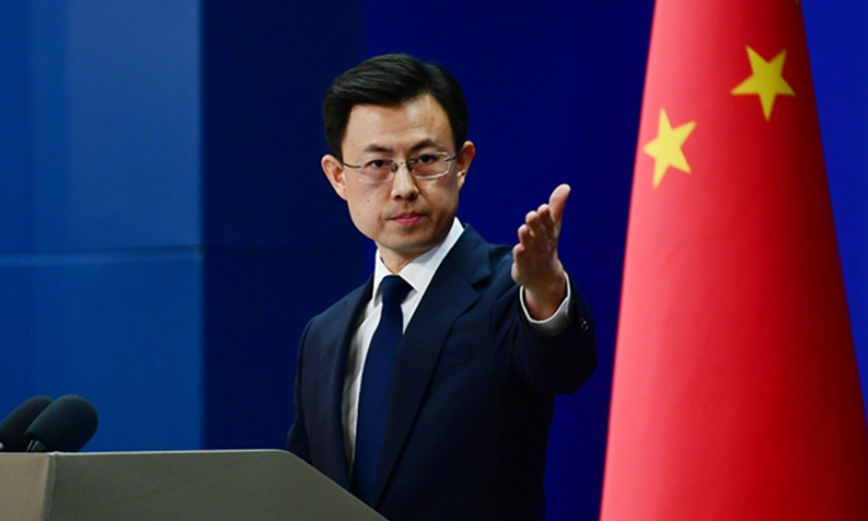
The “gray rhino” of Japan’s remilitarization is running toward us. Many international experts, scholars and media have noted that Japan has abandoned pacifism, and is undergoing its most dangerous shift in military and security policy since WWII, posing great threats to peace and stability in the region and beyond, Chinese Foreign Ministry spokesperson Guo Jiakun said on Tuesday.

The remarks were made in response to a media inquiry about Japanese Prime Minister Sanae Takaichi remaining unwilling to retract what she said on Taiwan region last November, while China has been amplifying criticism of Japan’s neo-militarism. Meanwhile, Sanae Takaichi and other Japanese officials have visited many countries in a short period of time to explain Japan’s “peaceful” stance, while easing restrictions on export of lethal weapons and planning to revise its pacifist Constitution and the three national security documents.
Guo said that Japanese militarism inflicted untold suffering on people in the Asia Pacific. The prosperity and development of Asia-Pacific countries benefits from the peaceful foundation laid down by the post-WWII international order. The reality that must not be ignored is that Japan’s right-wing forces are moving faster to undermine this order and foundation with specific roadmap and steps, he added.
In April, the Japanese government officially revised “the three principles on transfer of defense equipment and technology” and their implementation guidelines to enable overseas sales of weapons, including those with lethal capabilities, the Xinhua News Agency reported.
Kyodo News reported on Monday evening that former Japanese defense minister Itsunori Onodera had emphasized the importance of the government’s April decision to lift the export ban on lethal weapons. He claimed that “sharing defense equipment with allied and like-minded countries” would help enhance Japan’s so-called “deterrence capability.”
On May 6, the Japan Self-Defense Forces (JSDF) fired its Type 88 surface-to-ship missile system as part of the maritime strike in the Balikatan Exercise 2026, according to the Philippines’ ABS-CBN News. This marked Japan’s first overseas launch of offensive missiles since the end of WWII, Xinhua reported.
Meanwhile, according to NHK on May 6, Japan and the Philippines agreed that their defense ministers would establish a working group to promote the early transfer of the Abukuma-class destroyer escort ship from the Japan Maritime Self-Defense Force to the Philippines.
Chinese military affairs expert Zhang Junshe told the Global Times on Tuesday that what warrants particular attention is the shift in operational scenarios and institutional arrangements, namely, the gradual integration of Japan’s defense capabilities into multilateral security frameworks through overseas exercises, joint deployments and equipment exports, thereby amplifying their political and strategic significance.
Japan has broken through the restrictions of its pacifist Constitution, and the live-fire launch of offensive weapons. This represents one of Japan’s common “salami-slicing” tactics to gradually circumvent constitutional constraints. In recent years, Japan has employed such methods to steadily push past its limits, displaying a tendency toward militarism. This step-by-step approach breached Japan’s exclusively defense-oriented policy and relevant rules in international and domestic laws, Zhang said.
Tokyo’s policy shift also met domestic opposition. A NHK poll in March showed that when asked whether the government and ruling coalition should, in principle, allow the export of lethal weapons as part of defense equipment transfers, 32 percent were in favor and 53 percent were opposed.
A poll conducted by the Asahi Shimbun in April also showed that 75 percent of Japanese respondents believe that Japan should continue to uphold its “Three Non-Nuclear Principles.”
“History shall not be forgotten. Reality shall not be overlooked. The Asia-Pacific countries should stay clear-eyed and jointly reject the reckless moves of Japanese neo-militarism to safeguard the order of peace on which all countries rely for survival and development,” spokesperson Guo said on Tuesday.