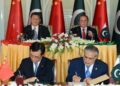

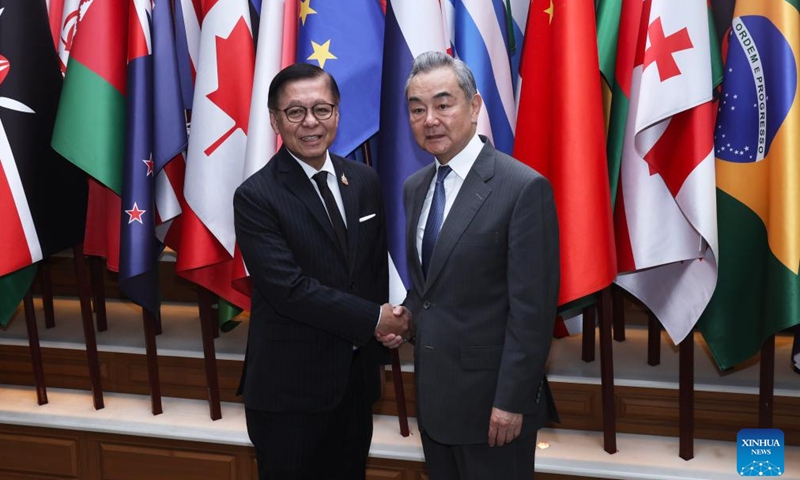
BEIJING: Chinese Foreign Minister Wang Yi and Thailand’s Deputy Prime Minister and Foreign Minister Sihasak Phuangketkeow held the third China–Thailand Foreign Ministers’ Consultation Mechanism meeting in Bangkok on April 24, 2026, reaffirming their commitment to strengthening bilateral cooperation amid a shifting global landscape.

During the meeting, Wang highlighted the significance of 2026 as the starting point of China’s 15th Five-Year Plan and the early phase of Thailand’s new government. He emphasized Beijing’s willingness to work closely with Bangkok to enhance strategic coordination, deepen political trust, and advance modernization efforts in both countries.
China reiterated its position of viewing Thailand as a key partner in its neighborhood diplomacy. Wang stated that Beijing aims to build a more stable, prosperous, and sustainable “shared future” partnership with Thailand while encouraging continued Thai support for China’s peaceful reunification policy.Both sides agreed to boost high-level exchanges, align development strategies, and initiate a new five-year cooperation plan.
They also stressed the need to jointly combat transnational crimes, particularly online gambling and telecommunications fraud, while enhancing multilateral cooperation and supporting global development initiatives. On regional issues, China expressed support for peaceful dialogue between Thailand and Cambodia to resolve border tensions, offering to facilitate trust-building efforts between the two neighbors.
Sihasak reaffirmed Thailand’s commitment to the One-China policy and underscored the importance of strengthening ties with Beijing across trade, connectivity, and security sectors. He also praised China’s role in regional peace efforts and expressed interest in expanding collaboration under multilateral frameworks.
The meeting further covered cooperation under the Lancang-Mekong framework and broader East Asian regional initiatives, with both sides agreeing to advance the next phase of the Lancang-Mekong Cooperation (LMC 2.0) to foster deeper regional integration and development.