
UNITED NATIONS: China’s envoy to the United Nations said the country’s decision, alongside Russia, to veto a draft UN Security Council resolution on the Strait of Hormuz was intended to prevent further escalation and create conditions for dialogue and negotiation.

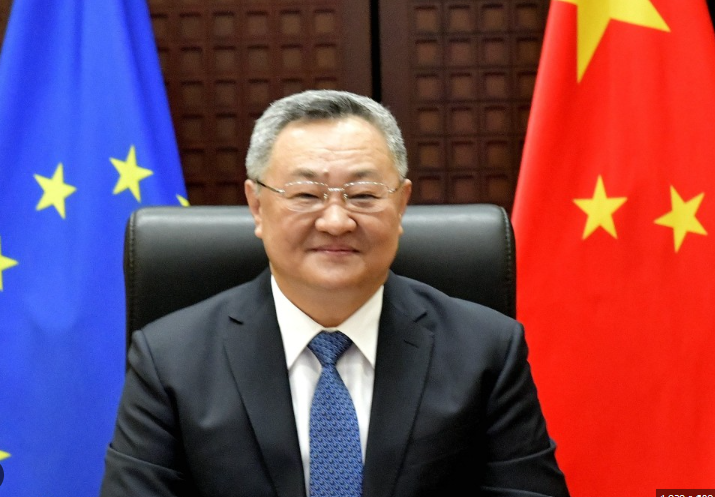
Speaking at the Security Council, the Chinese representative emphasized that China, as a permanent member, approaches every vote with responsibility, determining its stance based on whether a resolution genuinely contributes to peace and resolving the issue.
China acknowledged the concerns behind the draft resolution submitted by Bahrain on behalf of Gulf States but stressed that the Council’s actions must focus on deescalation and should not legitimize unauthorized military operations or encourage the use of force.
The envoy said the veto upheld international fairness and justice, safeguarded the principles of the United Nations Charter, and helped prevent further expansion of the conflict while creating conditions for a temporary ceasefire and renewed negotiations.
China also clarified that it does not support Iran’s attacks on Gulf States and called for ensuring the safety of international navigation through the Strait of Hormuz. It urged Iran to take steps to restore normal passage in the strait.
At the same time, the envoy criticized the United States’ increased military deployment and targeted blockade, describing such actions as dangerous and irresponsible. He noted that tensions in the strait are spillover effects of the broader Iran conflict and that only a complete ceasefire can ease the situation.
China welcomed the announcement of a ceasefire agreement and expressed support for all efforts aimed at ending the conflict. It also described the recent U.S.-Iran negotiations in Pakistan as a positive step toward deescalation.
Highlighting the fragile situation, the envoy said the priority now is to prevent a return to fighting and to maintain the momentum of ceasefire and negotiations. He urged all parties to adhere to the agreement, pursue dialogue, and resolve disputes through political and diplomatic means, while calling on the international community to oppose actions that could undermine peace efforts.
China also stressed the importance of respecting Lebanon’s sovereignty, security, and territorial integrity to avoid further complications in the region.
As a strategic partner to Middle Eastern countries, China reaffirmed its commitment to an objective and impartial role, actively engaging in mediation efforts. The envoy referenced proposals by Xi Jinping focused on peaceful coexistence, national sovereignty, adherence to international law, and balancing development with security as guiding principles for resolving the crisis.
China, he added, stands ready to continue facilitating dialogue, easing tensions, and contributing to long-term peace and stability in the Middle East.