
China has taken steps to counter sanctions imposed by the United States Department of the Treasury on five of its oil refineries, escalating tensions between Beijing and Washington.

The US measures, announced late last month, restrict the targeted firms’ access to the American financial system and aim to penalise entities doing business with them.
In response, China’s Ministry of Commerce said the sanctions “improperly” restrict trade between Chinese companies and third countries “in violation of international law and the basic norms governing international relations.”
The ministry issued a “prohibition order” stating that the sanctions “shall not be recognized, enforced, or complied with,” describing the move as necessary to “safeguard national sovereignty, security, and development interests.”
“The Chinese government has consistently opposed unilateral sanctions that lack UN authorisation and basis in international law,” it added.
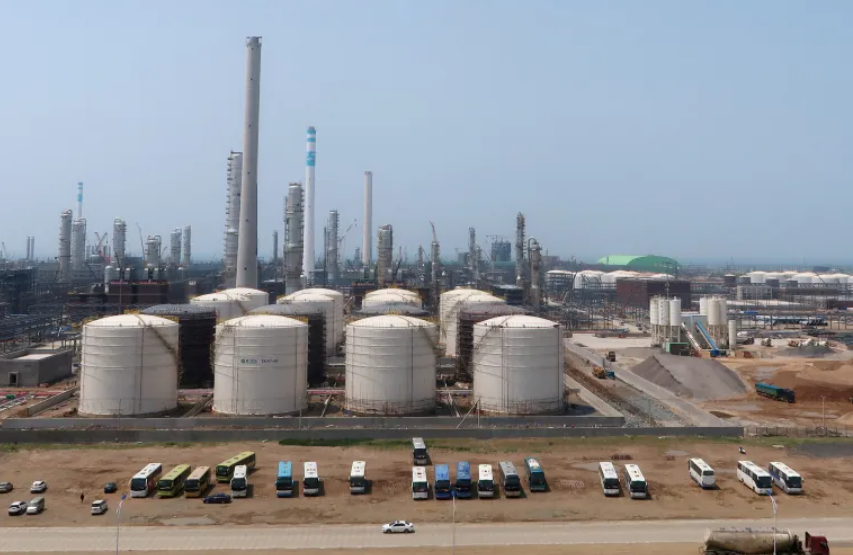
The order applies to Hengli Petrochemical (Dalian) Refinery and four other independent “teapot” refiners — Shandong Jincheng Petrochemical Group, Hebei Xinhai Chemical Group, Shouguang Luqing Petrochemical, and Shandong Shengxing Chemical.
When announcing the sanctions on April 24, US authorities described Hengli as “one of Tehran’s most valued customers,” alleging it generated hundreds of millions of dollars in revenue for Iran’s military through crude purchases.
The administration had already imposed sanctions on the other four refineries last year as part of broader efforts to restrict certain oil trade flows.
China relies heavily on Middle Eastern energy imports, with a significant share coming from Iran. Data shows China purchased more than 80 percent of Iran’s exported oil in 2025.
The so-called “teapot” refineries are smaller, privately operated facilities that function independently of state-owned giants like Sinopec. These refiners play a key role in China’s energy supply by processing discounted crude from sanctioned countries such as Iran, Russia, and Venezuela.
They account for about a quarter of China’s refining capacity but often operate on narrow or even negative profit margins, further strained by weak domestic demand. US sanctions have added to these pressures, creating challenges in sourcing crude and selling refined products internationally.
The move highlights Beijing’s firm opposition to unilateral US sanctions and signals broader geopolitical friction as both sides navigate disputes over energy trade and global economic norms.