
China on Thursday criticized Japan’s repeated promotion of a new version of so-called “free and open Indo-Pacific”, saying the concept is a “sugarcoated scheme” that sows division and rivalry, after Japanese Prime Minister Sanae Takaichi again highlighted the term during her visit to India.

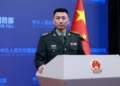
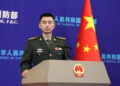
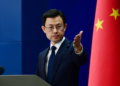
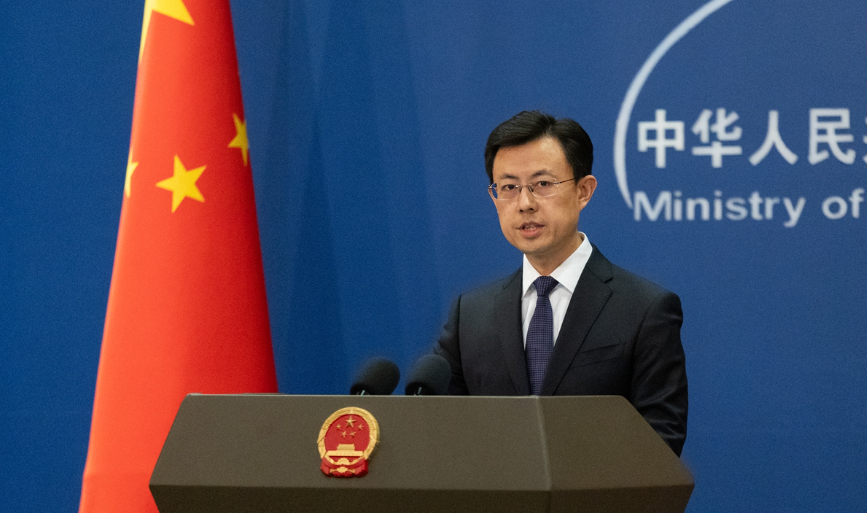
Asked by the Global Times at a regular press briefing to comment on Takaichi’s frequent mentions of the concept, including during visits to the Philippines, Vietnam, Australia and India, Chinese Foreign Ministry spokesperson Guo Jiakun said, “The concept carries the words ‘free and open’, but in fact sows division and rivalry. This sugarcoated scheme goes against the regional countries’ shared aspirations for peace, development and cooperation. It will never win genuine recognition.”
The Asia Pacific needs stability over turbulence, and values cooperation over division. Safeguarding the postwar international order and purposes and principles of the UN Charter is the foundation of the prosperity and stability in the Asia Pacific, as well as the shared responsibility of regional countries, Guo said.
“For some moves that create division and provoke confrontation, it is more imperative than ever for regional countries to stay clear-eyed, unite as one, uphold the right course of Asia-Pacific cooperation, enhance mutual trust through dialogue and consultation, preserve tranquility through mutually beneficial cooperation, and work together to build an Asia Pacific that is prosperous, stable, open, interconnected, universally beneficial, inclusive, united and mutually supportive,” Guo said.
According to Japan’s NHK, Takaichi referred to the “free and open Indo-Pacific” concept during talks with Indian Prime Minister Narendra Modi on Thursday afternoon, making it a major topic in the bilateral meeting.
NHK reported that during the meeting, the two sides agreed that Takaichi’s recently announced evolved “free and open Indo-Pacific” and Modi’s cooperation initiative proposed last year for the Global South and the Indo-Pacific were “aligned”, and agreed to deepen the two countries’ strategic cooperation to achieve common goals.
The “free and open Indo-Pacific” concept has been continuously pushed by Japan from former Japanese prime minister Shinzo Abe to the current Takaichi administration and was once incorporated into US strategy, Qian Feng, director of the Research Department at Tsinghua University’s National Strategy Institute, told the Global Times on Thursday.
However, as the US undergoes strategic contraction and shifts its focus back to the Western Hemisphere, with the US Indo-Pacific Command renamed back to the Pacific Command, Japan has grown increasingly concerned that the US may move away from Japan’s Indo-Pacific agenda and reduce Japan’s strategic visibility, Qian said.
Against this backdrop, Japan has repeatedly emphasized the concept and is attempting to draw India in to contain China, Qian said.
However, given India’s long-standing strategic independence, Japan’s expectations are unlikely to be fully realized, Qian said. Despite that India may hope to obtain technology and funding through cooperation with Japan and may seek to balance China on certain issues, the possibility that India will join a Japan-led Indo-Pacific clique to contain China in the way Tokyo hopes remains very low, he said.
NHK interpreted the meeting and Japan’s efforts to strengthen cooperation with India as “a response with China in mind.” In addition to reaffirming security cooperation with India, which it described as sharing basic values with Japan, Tokyo also hopes to deepen cooperation in economic security, including securing critical minerals, as China implements export controls on Japan, NHK claims.
Qian said Japan has been seeking to rally allies on diplomatic stages to counter China, including attempts to find alternatives to China in rare earths and supply chains. However, China’s rare-earth industrial chain is irreplaceable not only because of its rare-earth reserves, but more importantly because of its overwhelming advantages in refining, he said.
What Japan should do now is to change its new militarist path of military expansion, apologize to China for Takaichi’s erroneous remarks concerning Taiwan and seek reconciliation with China, rather than trying to bypass China. “Such attempts are nothing more than taking a roundabout path while ignoring the easier way close at hand,” Qian said.