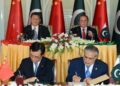

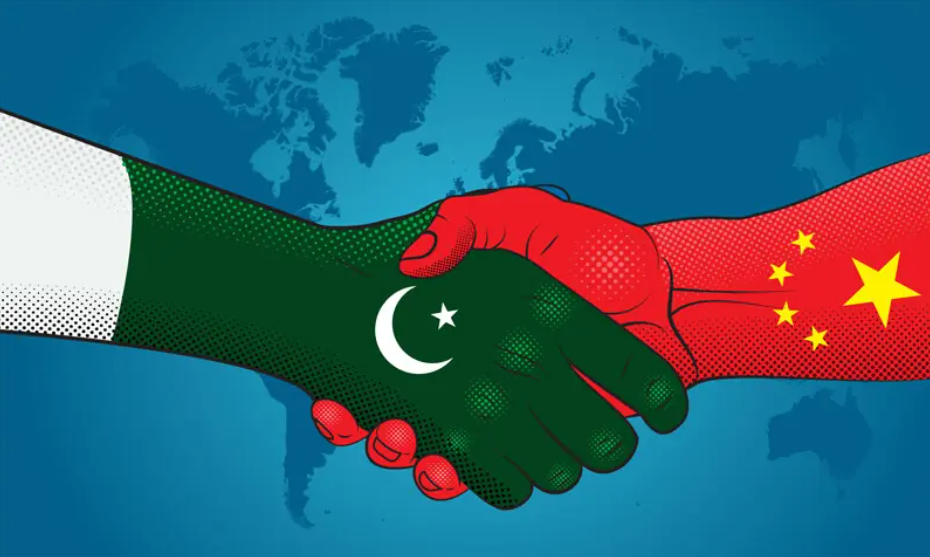
Asif Ali Zardari’s week-long trip to China is being seen as a renewed effort by Pakistan to reshape its “all-weather” partnership with Beijing by prioritising economic goals such as investment, industrial cooperation, and technology transfer.

The visit also marks a transition in bilateral relations, with provinces increasingly playing a central role as drivers of trade, investment, and technological exchange.
As Pakistan seeks foreign investment, joint ventures, and technological partnerships to stabilise its struggling economy, the trip aimed to draw Chinese capital, boost trade, and fast-track industrial collaboration.
Zardari’s focus extended beyond infrastructure to include industrial zones, agricultural modernisation, and technological cooperation under the China-Pakistan Economic Corridor (CPEC) 2.0. The visit also carried a defence component.
“There appears to be a deliberate shift towards sub-national diplomacy, where provinces act as engines of trade, investment and technology transfer”
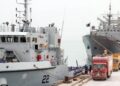
In Sanya, the president attended the commissioning ceremony of the first of eight Chinese-built Hangor-class submarines for the Pakistan Navy, calling it a “historic milestone” and reaffirming the country’s commitment to maritime security and defence cooperation with Beijing.
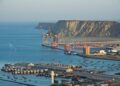
The trip highlights a shift in Islamabad’s strategy toward China, moving beyond large-scale infrastructure projects to deepen the next phase of China-Pakistan Economic Corridor through partnerships in manufacturing, clean energy, agriculture, and emerging sectors like electric vehicles and artificial intelligence. China has already invested around $25.9 billion in major transport and energy projects under CPEC, a flagship of the Belt and Road Initiative.
Unlike previous visits that typically centred on Beijing or Shanghai, Zardari began his trip in Changsha, the capital of Hunan province, before heading to Sanya in Hainan. He did not meet senior Chinese leadership but instead engaged with provincial authorities, industrial stakeholders, and defence officials in regions considered hubs of economic activity and industrial growth.
Several memorandums of understanding (MoUs) were signed, expanding cooperation in agriculture technology, water desalination, and tea production, with a strong emphasis on provincial-level engagement.
This approach, according to a China observer, “signals a deliberate shift towards sub-national diplomacy, where provinces act as engines of trade, investment and technology transfer.”
Reports suggest that Shehbaz Sharif is expected to visit China later this month to build on the momentum, focusing on increasing investment, advancing CPEC projects, and exploring new areas of cooperation. Analysts note that this sustained engagement reflects Pakistan’s move away from reliance on large infrastructure financing towards a more diversified, investment-led partnership, especially as the two countries mark 75 years of diplomatic relations.
Mansoor Ahmad Khan, Director at the Beaconhouse Centre for Policy Research, said the renewed engagement holds both economic and geopolitical importance.
He noted that cooperation has intensified due to shifting regional dynamics, particularly tensions in the Middle East. “Both countries are aligning their engagement in light of geopolitics, especially the conflict in the Middle East,” he said.
“China is significantly affected, as a large share of its oil imports either originates from Iran or transits through the Strait of Hormuz.” Islamabad, he added, has kept Beijing informed about its diplomatic efforts to help secure a ceasefire between the US and Iran. During Dar’s visit to Beijing in March, both sides consulted closely and proposed a five-point framework for de-escalation.
At the same time, Khan said both countries are using high-level geopolitical engagement to advance economic cooperation on specific projects.
Referring to Zardari’s visit, he highlighted that multiple MoUs were signed between the Sindh government, Chinese investors, and provincial authorities.
“In essence, the primary driver of engagement right now is the evolving geopolitical situation in the region”, he said, “but within that framework, both sides are actively pursuing avenues for bilateral economic cooperation.”
He added that engagement between the two countries is likely to grow further in the coming months.
“On the one hand, the conditions in Afghanistan are not conducive for CPEC expansion towards Central Asia and on the other, Pakistan did not develop any mechanism to move forward on the Corridor. Then there was the issue related to the security of Chinese nationals working on CPEC, as several were killed in terrorist attacks,” he said.
Whether this new investment-focused approach leads to a full revival of CPEC remains uncertain. While the shift towards targeted partnerships, provincial involvement, and sector-specific cooperation may bring fresh momentum, ongoing challenges including security concerns, instability in Afghanistan, and Pakistan’s institutional and policy limitations — will need to be addressed to rebuild investor confidence.