

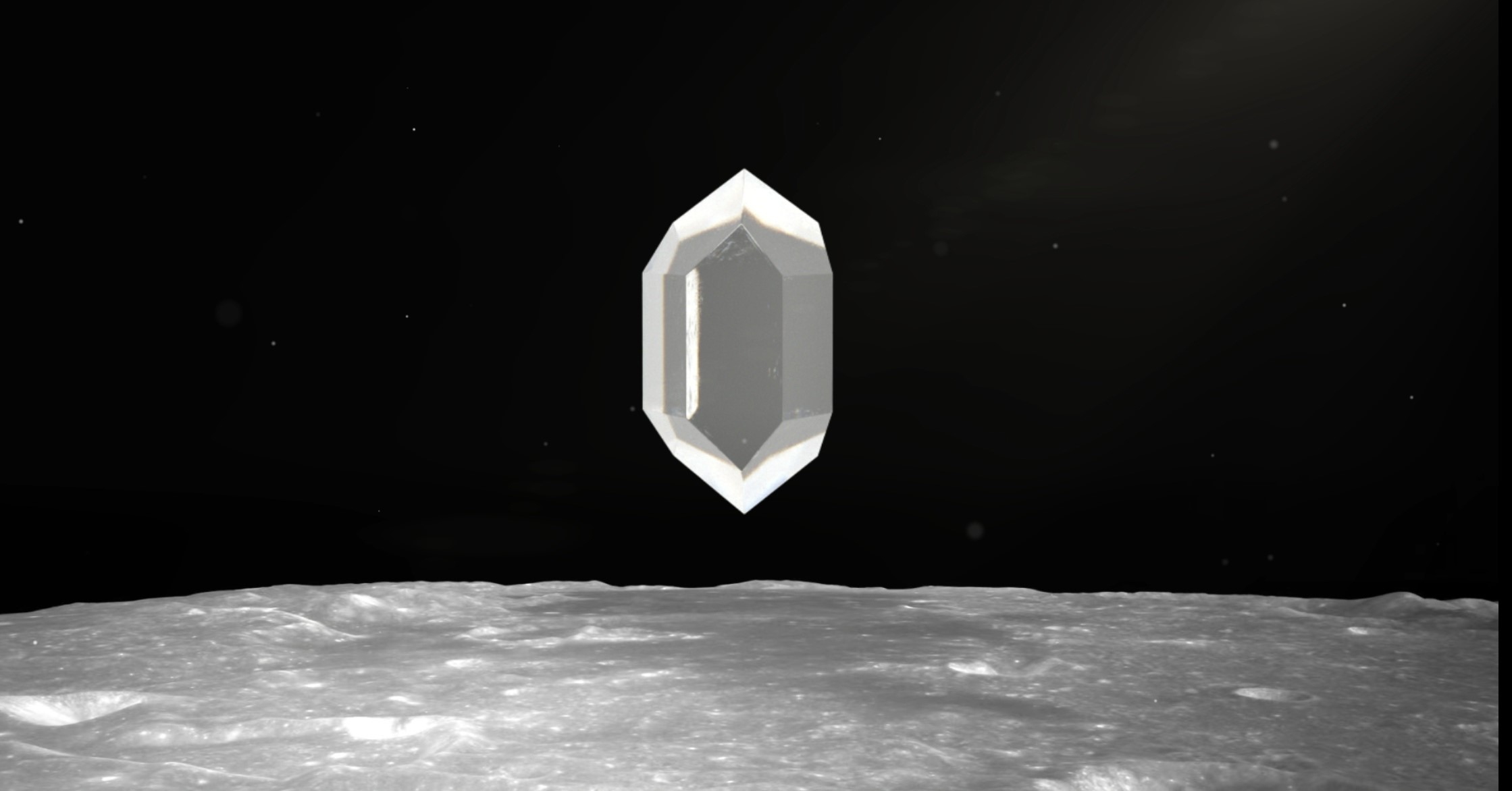
GLOBAL TIMES: Chinese scientists have identified two previously unknown lunar minerals from samples returned by the Chang’e-5 mission, marking a significant breakthrough in space research. The findings were announced during the 11th China Space Day and officially approved by the International Mineralogical Association.

The newly discovered minerals are named *magnesiochangesite-(Y)* and *changesite-(Ce)*.This discovery represents the second and third lunar minerals identified by Chinese scientists, following *changesite-(Y)* in 2022. Globally, they are the seventh and eighth new lunar minerals ever found in returned Moon samples.Both minerals belong to the rare-earth phosphate category and are embedded within lunar dust. Despite being only a few micrometers in size, their crystal structures reveal the complex and resource-rich nature of the Moon. They are part of the merrillite group, a class of phosphate minerals found in samples from the Moon, Mars, and asteroids.
‘Magnesiochangesite-(Y)’ was discovered by a team led by Li Ziying at the Beijing Research Institute of Uranium Geology. The mineral appears as tiny column-shaped crystals, typically measuring between 2 and 30 micrometers, and is mainly found in basalt fragments. Its structure is unique, with magnesium dominating its crystal lattice. Due to its extremely small size—far thinner than a human hair—identifying it required analyzing tens of thousands of particles to isolate a single viable crystal for testing.
Handling such a minute sample demanded extreme precision. Scientists used advanced tools, including focused ion beam scanning electron microscopes, to extract and analyze the crystal without damaging it—an operation compared to microsurgery.
The second mineral, ‘changesite-(Ce)’, was identified by a team led by Hou Zengqian from the Chinese Academy of Geological Sciences. It was found both in Chang’e-5 samples and in a lunar meteorite discovered in China’s Taklimakan Desert in 2024. This mineral is rich in cerium, a light rare-earth element, and stands out as a “fingerprint” mineral due to its distinct composition. While it shares a structural model with “changesite-(Y)”, the difference lies in their dominant elements—cerium in one and yttrium in the other.
Researchers also highlighted a key contrast between samples collected during the Apollo program and those from Chang’e-5. Apollo samples tend to contain heavier rare-earth elements, while Chang’e-5 samples show enrichment in lighter ones, suggesting variations in the Moon’s geological evolution. Identifying “changesite-(Ce)” required a combination of advanced analytical techniques, including electron microscopy, Raman spectroscopy, and X-ray diffraction, to confirm its structure and composition.
Beyond expanding scientific knowledge, the discovery may have practical applications. The mineral exhibits strong luminescent properties, making it a potential candidate for developing phosphor materials used in white light-emitting diodes (WLEDs).
Overall, these findings deepen our understanding of the Moon’s composition, geological history, and potential as a source of rare-earth resources, which could play a key role in future lunar exploration and in-situ resource utilization.