
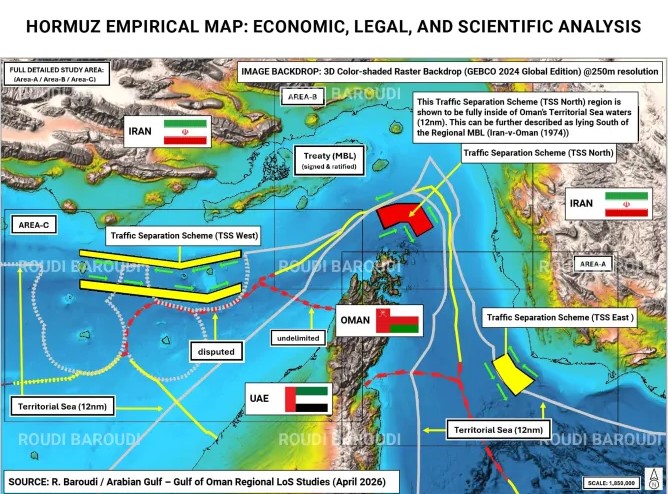
WASHINGTON (MNN); US President Donald Trump has announced that the US Navy will immediately begin blockading the Strait of Hormuz and intercept vessels in international waters that have paid tolls to Iran, escalating tensions in the region.

The move comes after failed ceasefire negotiations, with Iran’s Parliamentary Speaker Mohammad Baqer Ghalibaf blaming the United States for the breakdown, stating that US officials failed to gain the Iranian delegation’s trust.
US Vice President JD Vance confirmed that talks ended without an agreement, saying Washington had presented its “final and best offer.”
Meanwhile, Iran rejected US claims that two of its ships passed through the Strait of Hormuz and warned that any military attempt to navigate the waterway would trigger a “strong response.”
Iran’s Fars News Agency reported that two Pakistani-flagged oil tankers, Khairpur and Shalamar, turned back at the Strait, indicating possible disruption to maritime traffic.
In an interview with Fox News, Trump said the United Kingdom and other countries would deploy minesweeper vessels to the region. The US military’s CENTCOM confirmed it had begun preparations for mine-clearing operations.
However, criticism has emerged within the US. Senator Mark Warner questioned the effectiveness of the blockade, stating he did not see how it would compel Iran to reopen the waterway.
Iran’s Revolutionary Guards warned that any “miscalculated move” would trap adversaries in “deadly whirlpools,” asserting full control over the Strait.
Defending the blockade, Trump insisted Iran should not selectively allow ships through the passage. “It’s going to be all or none,” he said, adding that the policy would mirror sanctions imposed on Venezuela but on a larger scale.
He also reiterated threats against Iran’s energy infrastructure, claiming the US could destroy its power facilities within a day.
Analysts, including maritime expert Rockford Weitz, noted that both the US and Iran appear to be adopting similar selective control strategies over the Strait, raising legal concerns. While blockades are typically considered acts of war, the situation remains in a legal grey area under international maritime law.
Meanwhile, Oman’s Foreign Minister Badr Al Busaidi called for extending the fragile ceasefire, urging all sides to make concessions to avoid a wider conflict. Oman had been mediating between the US and Iran before talks collapsed following a US-Israeli strike on Iran earlier this year.