
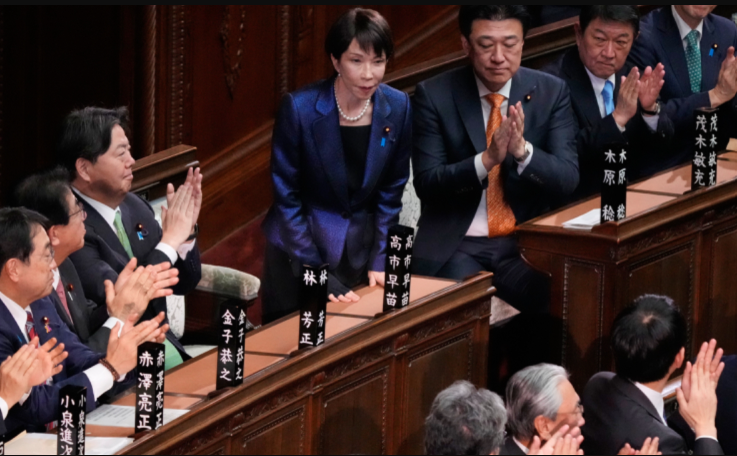
Global Times: Sanae Takaichi, president of Japan’s ruling Liberal Democratic Party (LDP), secured appointment in the powerful lower house as Japanese prime minister without a runoff vote on Wednesday, Xinhua News Agency reported. Following the attestation ceremony for the prime minister and the certification of cabinet minister at the Imperial Palace, the second Takaichi cabinet, a coalition with Japan Innovation Party (JIP), is expected to be formed on Wednesday evening, according to Japanese media reports.

In interviews with the Global Times on Wednesday, Chinese and Japanese scholars stated that the new Takaichi cabinet will likely focus on three main areas: economy and finance, security and defense, and domestic political integration. However, it faces multiple internal and external challenges: its pursuit of constitutional revision and military strengthening, its China policy, and its diplomatic strategy will not only shape Japan’s own development prospects but also raise concerns among regional countries and the international community.
The second Takaichi cabinet is expected to retain all its ministers, initially refraining from appointing members of its coalition partner JIP. It is possible that JIP members could be brought into the cabinet during a reshuffle possibly scheduled for this autumn. Japan’s Mainichi Shimbun analyzed that, on the one hand, only about four months have passed since the formation of the first Takaichi cabinet in October last year, a relatively short period. On the other hand, this approach aims to accelerate deliberations on the next fiscal year’s budget bill.
Masanari Koike, a researcher at Keio University’s Faculty of Economics and former member of the House of Representatives, told the Global Times on Wednesday that immediate cabinet participation would mean assuming full governing responsibility. If economic, fiscal, or personnel issues arise, JIP would share the political costs alongside the LDP. If the promise of cabinet posts materializes in an autumn reshuffle, JIP would gain an institutionalized position, transitioning from “external cooperation” to “internal participation.” This pacing is more conducive to consolidating its political capital, Koike said.
According to Kyodo News, the first Takaichi cabinet tendered its resignation en masse on Wednesday morning. Takaichi is expected to hold a press conference that evening to outline her thinking on policies advocated during the lower house election, including “responsible proactive fiscal policy,” exploring a temporary two-year suspension of consumption tax on food and beverages, and establishing a “national intelligence council” to enhance intelligence activities. On February 20, Takaichi will deliver policy speeches, marking the start of substantive debates between the ruling and opposition parties. This extraordinary Diet session will last 150 days, continuing until July 17.
Second Takaichi cabinet confronted by three challenges
The East Asia Forum recently published an article suggesting that significant uncertainty remains regarding how Takaichi will leverage her administration to tackle Japan’s severe fiscal and foreign policy challenges. Koike analyzed that Takaichi’s governance priorities will likely concentrate on three main areas: economy and fiscal policy, security and defense, and domestic political integration. Regarding economy and finance, Japan faces the persistent dilemma of sluggish growth coupled with fiscal deficit pressures. A likely path involves stimulating investment through defense and industrial policies, but the tension between fiscal discipline and economic stimulus will be a constant factor.
Koike stated that concerning security and defense policy, Takaichi has consistently advocated for strengthening defense capabilities, increasing the defense budget, and discussing constitutional revision. These elements are likely to form the core of her policy agenda. At the domestic level, her political acumen will be tested by the need to balance LDP internal factional dynamics, coordinate policies with JIP, and address public hardships stemming from rising prices. With the global economic slowdown, her policy maneuvering space is constrained. Therefore, Takaichi’s ability to govern effectively is not limitless but highly dependent on maintaining stable approval ratings.
Xiang Haoyu, a distinguished research fellow at the China Institute of International Studies, told the Global Times on Wednesday that while Takaichi has leveraged her lower house election victory to establish a strong governing position, potentially freeing her from some opposition and public constraints, she cannot simply “do as she pleases.” He identified three major challenges that will determine the prospects of her administration.
“First, can she curb price hikes and stimulate economic recovery and growth? This is the issue of utmost concern to the Japanese public. She must deliver tangible results quickly while effectively balancing the contradiction between expansionary fiscal policy and debt sustainability,”Xiang stated.
“Second, can she overcome domestic and foreign resistance to her radical political agenda? Accelerating her push for radical constitutional revision and military strengthening—including establishing a national intelligence agency, enacting an anti-espionage law, and even seeking to substantively initiate the constitutional amendment process—will still face public backlash. Her plans to expand military spending and bolster armaments will also encounter domestic fiscal constraints and external countermeasures,”Xiang said.
“Third, can she effectively break the diplomatic impasse with neighboring countries? Pursuing a foreign policy of ‘making distant friends while attacking near neighbors’ carries significant risks. Maintaining the Japan-US alliance and mitigating US economic pressure will also be far from easy,” Xiang stated.
Japan’s ‘remilitarization’ raises international concerns
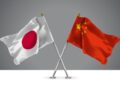
Japan’s Jiji Press reported that Takaichi aims to advance her diplomatic strategy, viewing the Asia-Pacific Economic Cooperation (APEC) meeting to be held in China this November as a potential breakthrough point for seeking improved relations with China. “Currently, Japan’s political and media circles do not regard improving ties with China as a pressing priority. Most voters also do not perceive issues with the Takaichi administration’s stance toward China. In such an environment, a major policy shift by Japan is unlikely in the near future,” Koike remarked. “Conversely, Japan is more likely to explore ways to compensate for the impact of deteriorating relations with China. For instance, to reduce dependence on Chinese rare earths, the Takaichi administration is actively promoting collaborative development with the US.” He added that the upcoming APEC meeting could be a good opportunity to improve China-Japan relations, it’s crucial to note that the US midterm elections around the same time and the current US administration’s China policy direction will also significantly influence Japan.
Xiang believes that regarding relations with China, Takaichi cannot pursue an exclusively confrontational path. On one hand, pressured by China’s strength and the need to stabilize ties to protect Japan’s practical interests, she might be compelled to seek renewed contact and communication with China. On the other hand, driven by deep-seated revisionist historical views and misguided perceptions of China, she is unlikely to abandon her agenda of containing China. Continuing to leverage the “China threat” to serve domestic political purposes will keep China-Japan relations under sustained pressure, ultimately limiting Japan’s diplomatic maneuvering room.
The East Asia Forum noted Takaichi’s dilemma: Being too cautious in international security affairs could alienate her nationalist support base. Yet, a Japan attempting to revise its pacifist constitution and pursue military expansion will inevitably provoke anxiety among its neighbors.
Notably, Singaporean Prime Minister Lawrence Wong posted on social media on Sunday that the day marked Singapore’s Total Defence Day, which also commemorates the fall of Singapore to Japanese forces in 1942, beginning a dark chapter in the nation’s history. “The suffering of those years left us with a hard but enduring lesson,” Wong wrote.
“Wong’s remarks are a significant indicator, reflecting that regional countries and the international community are beginning to recognize the dangers of Japan’s rightward shift and ‘re-militarization’,” Xiang commented. He emphasized that given the unique historical context and contemporary geopolitical factors, Japan’s attempts at constitutional revision and military strengthening have never been purely domestic matters. They carry substantial spillover effects, impacting East Asian peace and stability and the post-war international order. He stated that the Takaichi administration, by exaggerating external threats, stoking geopolitical tensions, and fanning xenophobia, is pushing forward the largest military buildup since WWII, even seeking to break from the “Three Non-Nuclear Principles.” This represents a departure from Japan’s post-war path of peaceful development, posing a tangible risk that regional countries must vigilantly watch and collectively address, Xiang said.