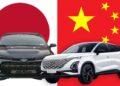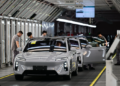

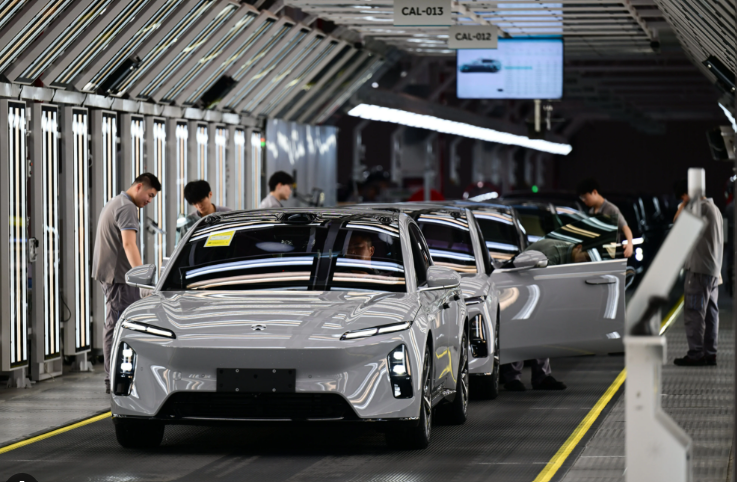
BERLIN: Surging fuel prices, combined with competitive pricing and advanced technology, are accelerating the adoption of Chinese electric vehicles (EVs) in Germany, as consumers increasingly factor in costs, features, and performance alongside environmental concerns.

According to Germany’s Federal Motor Transport Authority (KBA), battery electric vehicle registrations climbed to 70,700 in March, marking a 66.2 percent increase year-on-year. Registrations of plug-in hybrid electric vehicles also rose by 13 percent to 29,900.
Chinese automakers are gaining notable momentum. Brands such as BYD and Leapmotor saw their registrations roughly triple compared to the previous year, while Xpeng more than doubled its figures, signaling growing acceptance among German buyers.
A major factor behind this shift is the sharp rise in fuel costs. Diesel prices reached about 2.5 euros (2.9 U.S. dollars) per litre, while E10 gasoline stood at around 2.24 euros (2.6 dollars), according to the General German Automobile Club.
These increases come amid disruptions in oil transport routes linked to tensions in the Middle East, further straining Europe’s already high energy costs.
“Filling my Audi Q5 now costs 125 euros (145.7 dollars), up from 90 euros (104.9 dollars) before the Middle East conflict,” said Andreas Heumann, a Berlin resident considering a plug-in hybrid. “If prices stay high, switching cars becomes an economic decision.”
As fuel expenses rise, many households are rethinking their purchasing decisions. Some are postponing buying cars, while others are moving toward electric alternatives.
“Electric vehicles are becoming central to how consumers manage cost uncertainty,” said Zheng Yun, senior partner at Munich-based consultancy Roland Berger. “When fuel prices rise sharply, the total cost of ownership for combustion vehicles increases immediately, making EVs comparatively more attractive.”
In response, the German government has introduced measures to ease the burden. Since April 1, petrol stations have been restricted to one price increase per day to limit volatility. Meanwhile, Germany’s economy and energy minister, Katherina Reiche, has proposed reducing household electricity taxes. However, analysts warn these steps may only partially relieve the pressure caused by persistently high fuel prices.
As a result, EVs are increasingly seen not only as environmentally friendly but also as a practical financial choice. Dmitrij Kolesnik, a Berlin-based dealer, noted that Chinese EVs are earning recognition for their affordability, build quality, and advanced features.
This trend is also visible in showrooms. At a BYD dealership in central Berlin, staff reported that customers who once took weeks to decide are now finalizing purchases within days.
Magrin Tommaso, an Italian hairdresser living in Germany who recently test-drove several Chinese EV models, said their lower operating costs and advanced in-car technology made them stand out as “a smart product choice.” He ultimately decided to purchase a BYD Atto 3.
Government incentives are also playing a role. Subsidies of up to 6,000 euros (7,000 dollars) for new EVs starting in 2026 are supporting demand, though analysts emphasize that financial incentives are not the sole driver. Buyers are increasingly prioritizing long-term value, running costs, and features.
Chinese automakers are capitalizing on strengths in battery supply chains, cost efficiency, and software integration to expand in Europe. Zheng added that this reflects a transition from simple exports to building brand recognition and securing long-term positions in the European market.