

LAHORE, (Nikkei Asia): Pakistan’s most populous province, last year began collecting 50,000 metric tons of household waste daily, with a senior official touting it as the world’s largest waste management project.

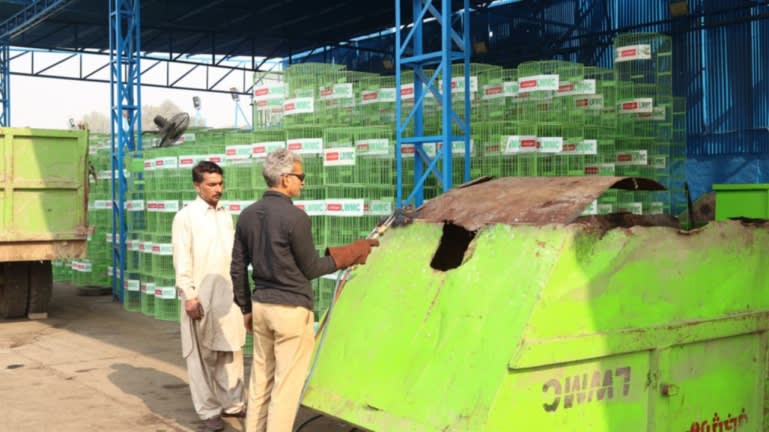
The province has a plan to generate 50 megawatts of electricity from the collected waste and is attracting foreign investors from countries such as China and the U.K. Punjab is home to nearly 130 million people living in 25,000 villages and more than 200 cities. Of this group, 85 million people living in rural areas lacked a waste collection system as of a year ago. The provincial government, in January 2025, launched a new waste collection system, the first of its kind in Pakistan, under the auspices of the Suthra Punjab Authority. Suthra means “clean” in Urdu. The authority contracts with private companies that together employ a workforce of 143,000 people and operate a fleet of more than 31,000 vehicles to collect household waste. The refuse is collected door to door, wherever possible, as well as from designated public containers. Trucks and other equipment fitted with tracking systems collect the waste, which is temporarily stored at makeshift sites within cities and then transported to disposal sites, such as landfills.
This entire process is digitized. Waste collection data from every union council, the smallest administrative unit, can be accessed in real time from the control room of the authority at the Lahore Civil Secretariat, which Nikkei Asia recently visited.
This effort is overseen by a public-private partnership, with individual contractors across Punjab investing a total of more than $535 million in waste collection infrastructure. The contractors collect the waste, and the authority pays them after verification.”Lahore is much cleaner as compared with Islamabad,” a top-ranking federal government official told Nikkei on condition of anonymity. “Lahore is using private contractors to collect waste, which is more efficient than government systems used for waste collection in Islamabad,” the official said.
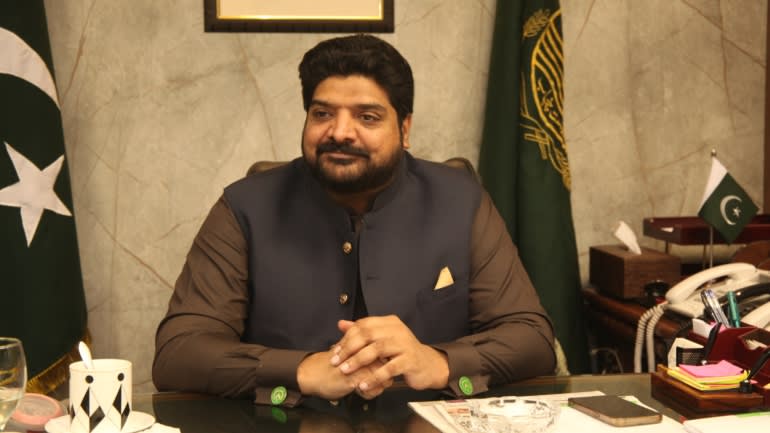
The government of Punjab has spent $330 million, collecting more than 11 million tons of waste in 2025. The authority has also started charging a nominal fee to households — ranging between $1 and $18 per month, depending on the size and location of the residence, for waste collection. The project aims to generate $307 million annually in fees to fund this initiative in the future.In an interview with Nikkei at his office in Lahore, Babar Sahib Din, director-general of Suthra Punjab Authority, described the program as “the world’s largest waste management system.” The province’s program was presented at the U.N. COP30 climate change conference, where it drew much praise. “The system is ISO-certified, inspected by SGS (a Swiss testing, inspection and certification company), and efforts are underway to register it with the Guinness Book of World Records,” Din added.
”The project is based on the vision of the chief minister of Punjab, Maryam Nawaz Sharif, to establish a system across Punjab that would recognize cleanliness as a basic right for all 130 million people” in the province, Din said.
Apart from managing waste, Din said the project generates “enormous” economic benefits in rural and nonindustrial areas. “The overall economic impact of this project is around $1.4 billion per year, along with large-scale job creation,” he said, adding that the economic gains for locals include the growth of businesses to repair vehicles and make uniforms for staff, among others.
Momin Sheikh, an urban development expert based in Lahore, told Nikkei there is a lot of weight to the government’s claim about the success of the program, and that it has helped improve waste management in Punjab. “While places like Lahore already had functional waste management infrastructure, it is small towns and villages that have benefited from the program the most,” Sheikh said. “I observed this firsthand in a very small village called Isakhel, which was surprising to see how far deep the program is going.”
The waste collected by the authority is dumped in landfill sites such as Lakhodair, on the outskirts of Lahore. The authority plans to generate electricity from the collected waste.The authority is in the advanced planning stages of developing a 50 MW waste-to-energy power plant, producing enough electricity to serve around 240,000 households in Lahore. It aims to convert 3,000 tons per day of mixed municipal waste to electricity through controlled combustion and energy recovery. The project is estimated to cost $180 million and a feasibility study is underway.
The electricity will be sold to government departments, industrial estates, housing societies, and the Orange Line Metro Train operated by a Chinese company, Guangzhou Metro Group.In addition to power generation, studies are underway on biogas, biofertilizer, methane capture and solar parks on waste landfill sites.”The landfill sites produce huge volumes of methane, and the standard practice is to collect this gas, which is then used to power gas power plants locally and produce electricity,” explained Sheikh, the development expert.
Companies from China and the U.K. have expressed interest in building a waste-to-energy power plant in Lahore. The authority hopes to attract more foreign investors for power generation projects.”International investors and technology providers are welcome, particularly those focused on clean energy and clean technologies,” said Din. “This represents a major long-term opportunity for investors under a sustainable public-private partnership model,” he said.