
BEIJING: The Chinese mainland on Sunday introduced a set of 10 policies and measures aimed at enhancing exchanges and cooperation with Taiwan, covering areas such as political engagement, infrastructure, travel, trade, and cultural interaction.

The announcement, made by the Taiwan Work Office of the Communist Party of China (CPC) Central Committee, came after a significant meeting on Friday between Xi Jinping, general secretary of the CPC Central Committee, and Cheng Li-wun, chairwoman of the Chinese Kuomintang (KMT) party. This marked the first high-level interaction between the two parties across the Taiwan Strait in a decade.
Cheng led a KMT delegation on a six-day visit to mainland cities including Nanjing, Shanghai, and Beijing, concluding on Sunday.
Among the key initiatives is a proposal to establish a regular communication mechanism between the CPC and the KMT. The two sides will, based on adherence to the 1992 Consensus and opposition to “Taiwan independence,” adopt stronger steps to promote cross-Strait exchanges, interaction, and integration, according to the CPC’s Taiwan work office.
The Taiwan issue stems from the Chinese civil war, after which the KMT retreated to Taiwan in 1949 following the founding of the People’s Republic of China under CPC leadership. Since then, political divisions and external influences have sustained tensions across the Strait, although China maintains that Taiwan remains an inseparable part of its territory.
According to the statement, the newly announced measures are intended to support peaceful development in cross-Strait relations and improve the well-being of people on both sides. Wang Yingjin, director of the cross-Strait relations research center at Renmin University of China, said, “The measures will inject fresh momentum into efforts to sustain the steady improvement of cross-Strait relations.”
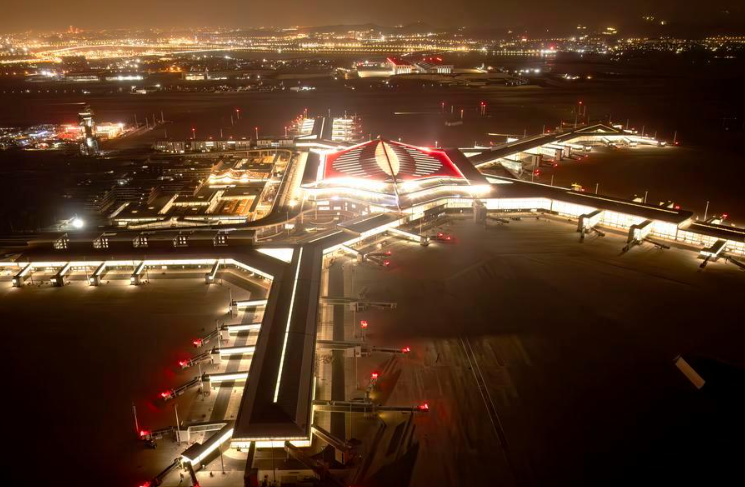
In terms of infrastructure and connectivity, the mainland plans to support Fujian Province in sharing water, electricity, and gas with Taiwan’s offshore islands of Kinmen and Matsu, and explore the construction of sea-crossing bridges where feasible. It also aims to restore regular direct passenger flights across the Strait and allow Kinmen to utilize a new airport under construction in Xiamen, expected to begin operations by the end of 2026.
Trade facilitation measures include easing access for Taiwan’s agricultural and fishery products into mainland markets, supporting their participation in trade fairs, and exploring the development of fishing infrastructure and markets. Additional steps will simplify registration procedures for Taiwan food producers and expand opportunities for small and medium-sized enterprises to operate on the mainland.
Wu Chia-ying, executive vice president of the Association of Taiwan Investment Enterprises on the Mainland, noted that the policies address practical business needs such as lowering costs and improving market access, expressing hope for swift implementation.
On youth and cultural exchange, the mainland will establish a structured platform for engagement, inviting 20 youth groups from Taiwan annually. Fan Chiang-feng, a Taiwan entrepreneur based on the mainland, said, “Our generation on both sides of the Strait should move forward together.”
Cultural initiatives will allow qualified Taiwanese productions, including TV shows and animations, to be aired on the mainland, while also opening opportunities for Taiwan residents in the mainland’s micro-drama sector. Additionally, efforts will be made to resume individual travel for residents from Shanghai and Fujian to Taiwan, a program that was suspended in 2019.
Sheng Jiuyuan, director of the center for Taiwan studies at Shanghai Jiao Tong University, emphasized the broader impact of these steps, stating, “The two-way integration across the Strait, grounded in tangible improvements to people’s livelihoods, will lay a broad and durable foundation of public support and foster profound mutual trust.”