

TOKYO, (Reuters): Japan’s economy limped back to meagre growth in the fourth quarter, significantly missing market expectations in a key test for Prime Minister Sanae Takaichi’s government as cost-of-living pressures drag on confidence and domestic demand.

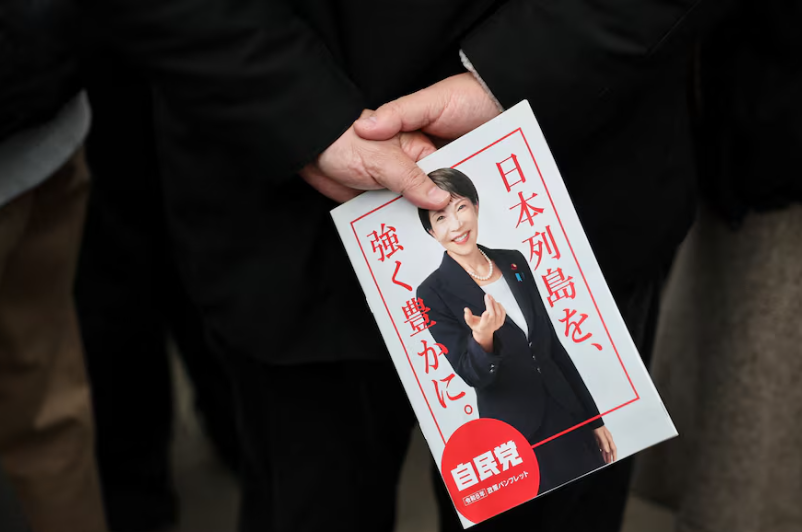
Fresh off a sweeping election victory, Takaichi’s administration is preparing to ramp up investment through targeted public spending to shore up consumption and revitalise economic growth.
Monday’s data brings sharp focus to the challenge at hand for policymakers at a time when the Bank of Japan has reiterated its pledge to keep raising interest rates and normalise monetary settings from years of ultra-low borrowing costs amid persistent inflation and a weak yen.
“PM Takaichi’s efforts to reflate the economy via looser fiscal policy look prescient,” said Marcel Thieliant, head of Asia-Pacific at Capital Economics.
Gross domestic product in the world’s fourth-largest economy increased an annualised 0.2% in the October-December quarter, government data showed, well short of a median estimate of a 1.6% gain in a Reuters poll. It barely scraped back to growth from a larger revised 2.6% contraction in the previous quarter.
The reading translates into a quarterly rise of 0.1%, also weaker than the median estimate of a 0.4% uptick.
“It shows that the economy’s recovery momentum is not very strong,” Meiji Yasuda Research Institute economist Kazutaka Maeda said. “Consumption, capital expenditure and exports – areas we hoped would drive the economy – just haven’t been as strong as we expected.”
The surprisingly soft momentum will keep investors on alert for Takaichi’s campaign pledge to suspend a consumption tax, an issue that sparked turmoil in Japanese markets worried about fiscal slippage in a nation with the heaviest debt burden in the developed world.
“In fact, sluggish economic activity increases the chances that Takaichi will not only press ahead with suspending the sales tax on food but enact a supplementary budget during the first half of the fiscal year that starts in April already rather than wait until the end of this year,” Capital Economics’ Thieliant said.
Japanese stocks stuttered in the wake of the GDP data, while bonds were subdued.
SLOWER RATE HIKES?
Analysts project Japan will continue to expand at a gradual pace this year, though the fourth quarter’s weak outcome suggests the economy might struggle to fire on all cylinders.
“Whether the economy can achieve sustainable growth really depends on whether real wages can firmly return to positive growth,” Shinichiro Kobayashi, principal economist at Mitsubishi UFJ Research and Consulting, said.
A survey this month by the Japan Center for Economic Research showed 38 economists forecast an average annualised GDP growth of 1.04% in the first quarter and 1.12% in the second quarter.
Economists say the latest GDP report is unlikely to affect the Bank of Japan’s policy decisions, but Takaichi’s historic election win has heightened market attention to whether the dovish premier will renew her calls for interest rates to be kept low.