
BY CENTER FOR TRADE AND ECONOMIC STRATEGIES (CTES)

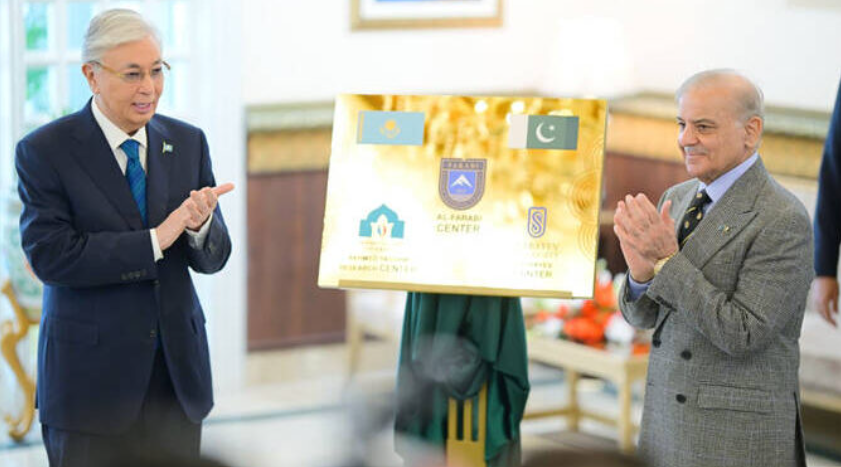
For a long time, the map of Central Asia was perceived as an immutable given, where major routes and economic vectors invariably led to the North or the East. However, the state visit of President Kassym-Jomart Tokayev to the Islamic Republic of Pakistan on February 3-4 witnessed a tectonic shift in the continent’s geo-economics.
This event went far beyond a high-level protocol meeting, fixing a new reality: Kazakhstan and the Central Asian region as a whole are moving away from the limiting paradigm of being “landlocked,” confidently transforming into a “land-linked” connectivity hub. This time, pragmatism has outpaced diplomacy.
Despite skepticism regarding geographical complexity and logistical barriers, the figures following the negotiations testify that business adapts to new conditions faster than the ink dries on memorandums. The business forum resulted in the signing of over 30 documents worth approximately $200 million. It is not just the growth of trade turnover that matters, but the structural change. The parties have moved from intentions to firm contracts.
A striking example is the agreement by Falcon EuroBus to supply 600 electric buses to Pakistan and the agreement on constructing a sugar factory in Kazakhstan with the participation of Pakistan’s Almoiz Group. Kazakhstan’s export is diversifying to include high-tech engineering products, and the ambitious goal of reaching one billion dollars in trade has gained a real foundation.The partnership architecture has shifted from a declarative to a project-based plane.
The “diplomacy of handshakes” has been replaced by the “diplomacy of contracts,” creating a solid legal basis. The ascent to a new political level is legally enshrined in the signed Joint Declaration on Establishing a Strategic Partnership. This is a clear signal to the external world: relations between Astana and Islamabad are of a long-term and allied nature.
In parallel, barriers for business are being removed thanks to agreements on transit trade and administrative mutual assistance in customs matters. The technology track has not been left aside: the signed memorandum on Artificial Intelligence and university cooperation show that Pakistan is viewed not only as an agricultural partner but also as a promising IT hub.
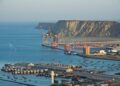
Transport remains the core of the interaction, as for Central Asia, Pakistan is primarily the shortest route to the World Ocean. Pakistani ports are viewed not as distant points on a map, but as a natural extension of Eurasia’s transport system – its southern maritime gates.
For the first time, direct cooperation has been established between the logistics operators of the two countries, such as KTZ Express and NLC, guaranteeing the launch of a multimodal service. The concept of linking the port of Aktau with Pakistan’s Karachi and Gwadar creates a “seamless” environment for transit, where Karachi serves as the commercial gateway, and the deep-water Gwadar acts as a strategic node.
The view from the South confirms that this strategy is built on a balance of interests. For Pakistan, the alliance with Kazakhstan solves several critical internal tasks. Firstly, there is the issue of energy security: the Pakistani economy finds a reliable strategic donor of hydrocarbons and coal in Astana. Secondly, it concerns the utilization of port capacities. The ports of Karachi, Qasim, and Gwadar possess colossal potential, but profitability requires a constant transit flow from Central Asia.
Kazakhstani transit effectively justifies Islamabad’s investment in infrastructure. Thirdly, a premium market opens up for Pakistani textiles, pharmaceuticals, and the agro-industrial sector, whose products fit perfectly into the seasonal cycles of the northern neighbor.
Economic integration with the North allows Islamabad to diversify external ties and balance its influence in the region.Cooperation with Pakistan is also seen as a strategic springboard to the African horizon.
In the context of globalization, Central Asia and Africa possess significant potential for mutual trade. Now, thanks to the agreements reached, the initiative to create a multimodal corridor “Kazakhstan-Pakistan- East Africa” is moving into a practical plane. The logic of the route is simple: goods from Kazakhstan reach Pakistani ports, from where a direct maritime exit opens to Tanzania, Kenya, and South Africa. This is a solution to the “last mile” problem on a global scale.Building physical bridges is impossible without an intellectual foundation. During the visit, cooperation between higher education institutions and research structures was elevated to a new orbit. The parties moved away from formal memorandums to real agreements between leading universities and think tanks. Political and economic decisions in Astana and Islamabad will now rely on deep, synchronized expert analysis capable of forecasting risks and finding new growth points.Looking at the planning horizon, a clear roadmap emerges for the countries. The tactic for the coming years (2026-2027) is the debugging of mechanisms and the implementation of signed agreements. The focus shifts to creating a unified digital and logistical environment, launching a “single window” system, and establishing an end-to-end tariff. It is expected that business, having received clear rules of the game, will reorient flows to the southern vector.
The strategy of the future (2028-2030) is the era of infrastructure, when political agreements transform into large-scale modernization of railway arteries and port specialization, where each node will play its unique role.
Ultimately, the successful outcome of the visit is a question of genuine geopolitical sovereignty for Central Asia. Having an alternative outlet to the sea multiplies the region’s negotiating positions with global players. By involving southern neighbors in major economic projects, Kazakhstan invests in its own security, as joint infrastructure becomes a better guarantor of stability.
The region stands on the threshold of a new economic reality.The President’s visit became the key that launched the complex but vital mechanism of integrating Central and South Asia.