
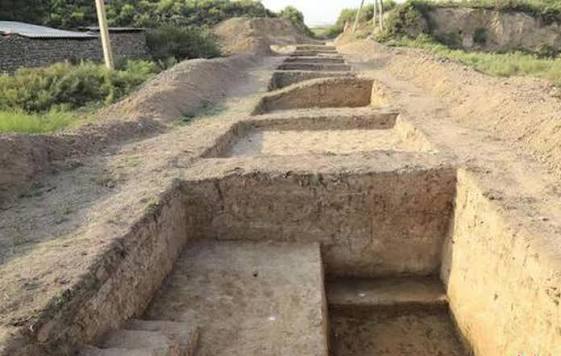
(XINHUA): Chinese and Uzbek archaeologists have uncovered ancient city walls at the historic site of Kuva in eastern Uzbekistan, dating from the 3rd century BC to the 10th century AD, offering new insights into a major Silk Road settlement.Situated in the Fergana Valley, the Kuva site covers about 110,000 square meters and was once a key hub along the ancient Silk Road.

Historical records link Kuva to the ancient state of Dayuan, mentioned by Chinese envoy Zhang Qian during the Han Dynasty, highlighting its centuries-old ties with China.Since 2023, a joint research team from the Luoyang Institute of Archaeology in China’s Henan Province and Fergana State University in Uzbekistan has been conducting excavations at the site.
According to Liu Bin, head of the Chinese team, archaeologists have identified remains of a palace complex, city gates, defensive walls, residential foundations, streets, and workshops. Excavations in 2025 focused on the northern city gate and nearby moat, revealing that the walls were rebuilt and adapted multiple times using adobe and mud bricks. These findings confirm the continuous use of the fortifications over more than a millennium.Researchers say the long-term modification of the walls reflects Kuva’s resilience, strategic importance, and evolving functions as a Silk Road center.
The construction techniques also provide valuable evidence of architectural practices and cultural influences across different historical periods. Further surveys of the palace’s eastern section uncovered wall foundation trenches and a surrounding moat, helping scholars better understand the city’s overall layout. Liu added that systematic excavations planned for this year aim to clarify the full structure and functional zones of the ancient city.