
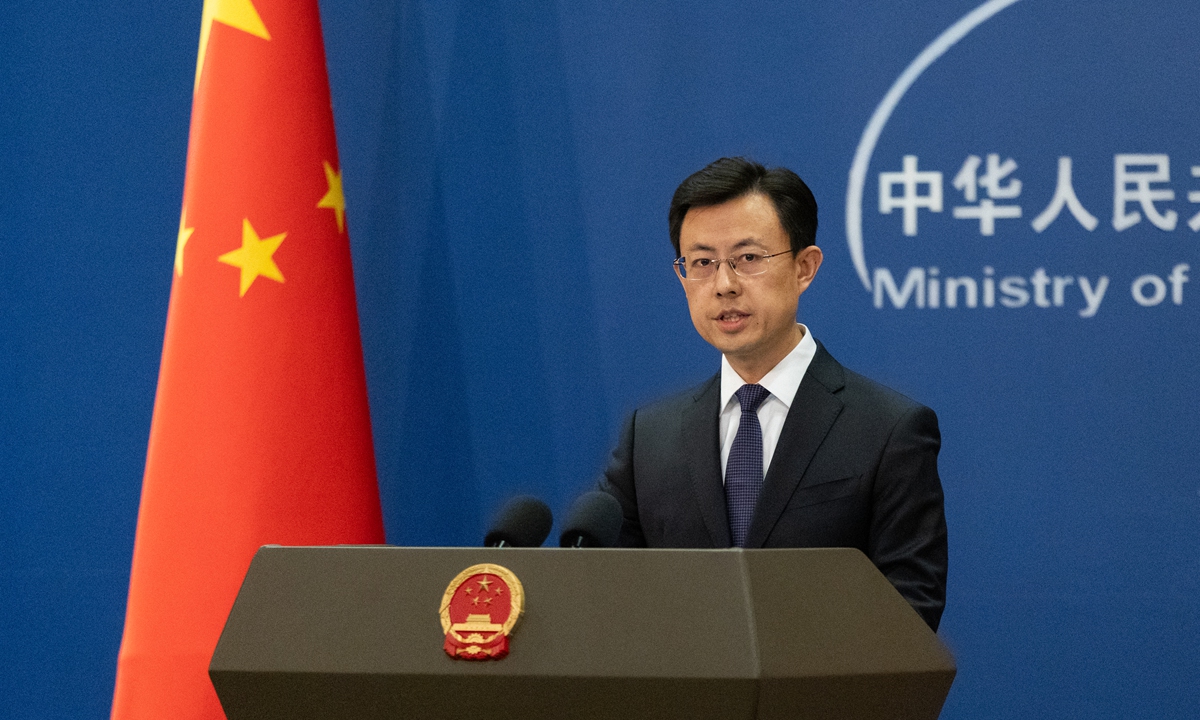
Zhang Xiaogang, a spokesperson for China’s Ministry of National Defense, also denounced New Zealand’s activities at a press conference on Friday. Zhang said that recently, a P-8A anti-submarine patrol aircraft of the New Zealand air force has conducted frequent close-in reconnaissance and harassment in the airspace and waters of the Yellow Sea and East China Sea in disregard of China’s warnings.

The Chinese military has taken professional and forceful measures to respond to and deal with the situation, and has lodged stern representations with the New Zealand side.
Such acts by New Zealand undermine China’s sovereignty and security, severely disrupt flight order in the relevant airspace, and may easily trigger maritime and aerial incidents, Zhang said.
“We urge the New Zealand side to exercise strict restraint on its frontline forces, immediately stop disruptive and irresponsible acts that jeopardize civil aviation safety, and prevent risks of misunderstanding and miscalculation,” Zhang said. As a relatively advanced long-endurance anti-submarine patrol and reconnaissance aircraft, the P-8A could conduct reconnaissance on China’s surface vessels and submarines, Song Zhongping, a Chinese military affairs expert, told the Global Times on Friday.
Ahead of the Chinese ministries’ response to the New Zealand military plane’s close-in reconnaissance and harassment near China, the Japanese Foreign Ministry claimed on March 26 that from late March to mid-April, the Royal New Zealand Air Force maritime patrol aircraft P-8A would engage in monitoring and surveillance activities against “illicit” maritime activities in the name of the United Nations Security Council resolutions, using Kadena Air Base under the Agreement Regarding the Status of the United Nations Forces in Japan.
It also claimed Japan “welcomes these activities.”The Kadena Air Base, originally a military facility left over from the Cold War, has now been reduced to a “springboard” for non-regional countries to conduct close-in reconnaissance against China and create regional tensions, Lü Chao, a research fellow at the Liaoning Academy of Social Sciences, told the Global Times.
Japan, far from fulfilling its due management responsibilities, has instead turned a blind eye to or even condoned New Zealand’s use of the Kadena Air Base to carry out illegal harassment activities targeting China, showing that Japan has hitched itself to the chariot of military confrontation and willingly serves as an accomplice to other countries’ provocations against China, the expert said. The Japanese ministry claimed that it would be the ninth time New Zealand’s aircraft had engaged in these activities since 2018.
Song said China is geographically far away from New Zealand, and China follows a defense strategy that is defensive in nature, meaning it has no intention to threaten New Zealand’s national security. This move by New Zealand will only invite trouble upon itself.