
A major Chinese commercial space company carried out the country’s first reusable rocket test on Wednesday, successfully placing the spacecraft’s second-stage booster into orbit even though recovery of the first stage failed.

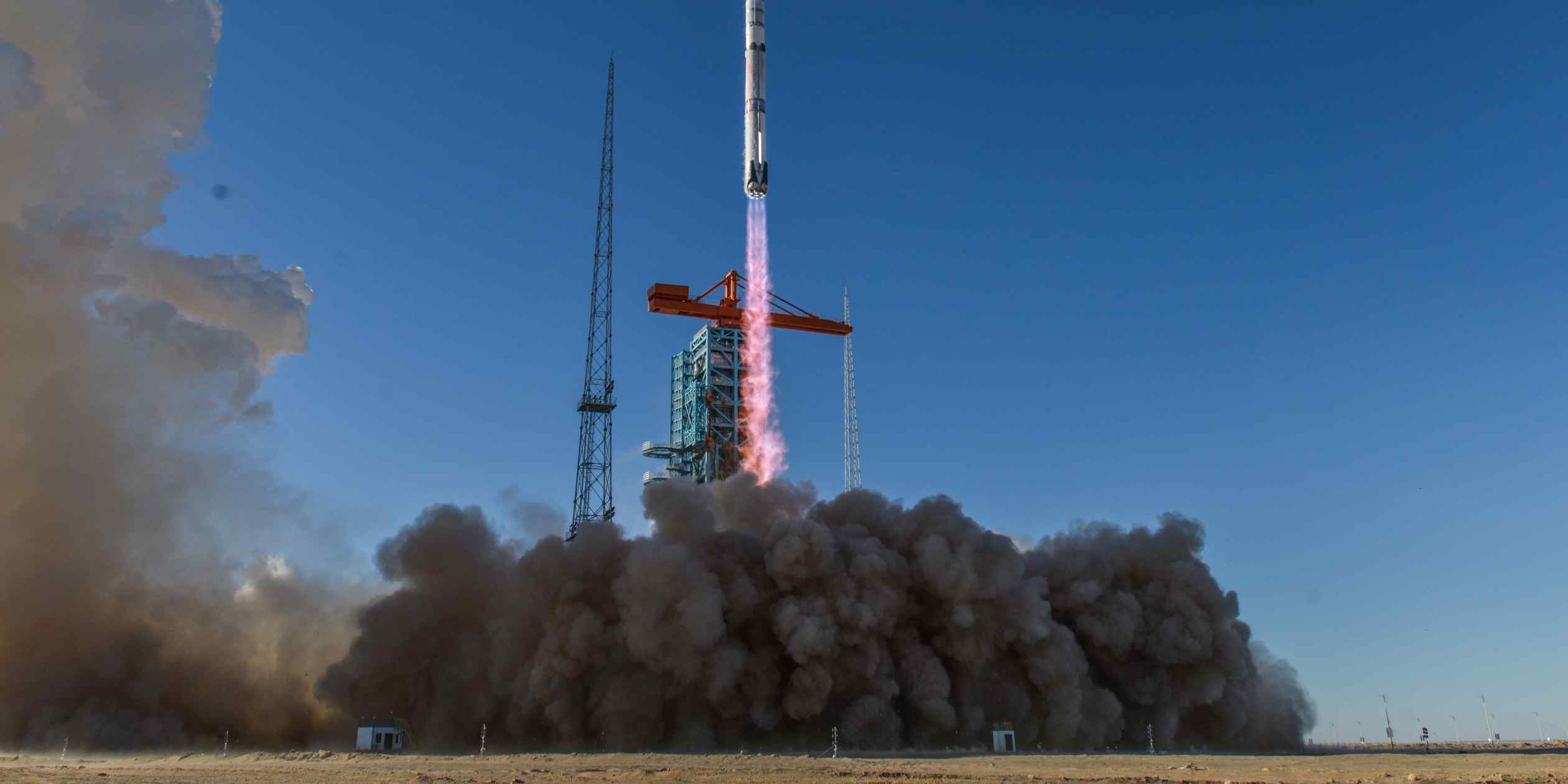
Beijing-based LandSpace launched the ZQ-3 Y1 — the inaugural model in its new stainless-steel rocket series — from the Jiuquan Satellite Launch Center at noon. While the second stage reached its intended orbit, the first-stage booster exploded above a designated landing zone in Minqin county, Gansu, roughly 390 kilometers from the launch site.
LandSpace said the mission validated the ZQ-3’s testing and flight plan and confirmed system compatibility across the rocket. The flight also generated key technical data that will help refine the rocket’s design, improve reliability, and advance its future reusability.
Standing 66.1 meters tall and 4.5 meters wide, the ZQ-3 Y1 has a liftoff mass of nearly 560 metric tons and more than 750 tons of thrust, enabling it to carry large satellites into low-Earth or sun-synchronous orbits. The rocket uses the company’s methane-powered engines — nine TQ-12A engines on the first stage and a TQ-15A on the second.
Methane engines can be reused and produce fewer emissions compared with traditional engines. Its stainless-steel propellant tanks offer high strength and heat resistance at a lower cost. The rocket is also equipped with grid fins and landing legs designed to allow soft landings of the first-stage booster in future missions.
LandSpace has made significant investments in the ZQ-3 program as it aims to compete for commercial launch contracts linked to China’s ambitions to build a large-scale internet satellite constellation. The company previously made history in July 2023 with the world’s first orbital launch of a methane-fueled rocket, the ZQ-2. The ZQ-2 and its upgraded version have completed six missions so far.