
Global Times: The Philippines has accused China of “bullying” after alleging that Chinese forces fired flares at a Philippine Coast Guard aircraft over the South China Sea, where the plane was conducting what Manila described as a “routine” patrol mission. Some Chinese experts said on Friday that China’s response was legitimate and restrained, aimed at warning off aircraft engaged in dangerous flights that infringe on China’s sovereignty and security interests.

They noted that if the Philippines continues such actions, pressing forward step by step while mistaking China’s restraint for weakness, it will be met with more resolute measures.
According to Philippine media outlet Inquirer.net, Jay Tarriela, spokesperson for the Philippine Coast Guard, claimed that the incident occurred on Thursday. In a statement, he alleged that “Chinese forces fired flares directly at a Philippine Coast Guard Caravan aircraft while we were conducting routine maritime domain awareness flights over the Kalayaan Island Group,” describing the move as “a clear and deliberate act of bullying.”
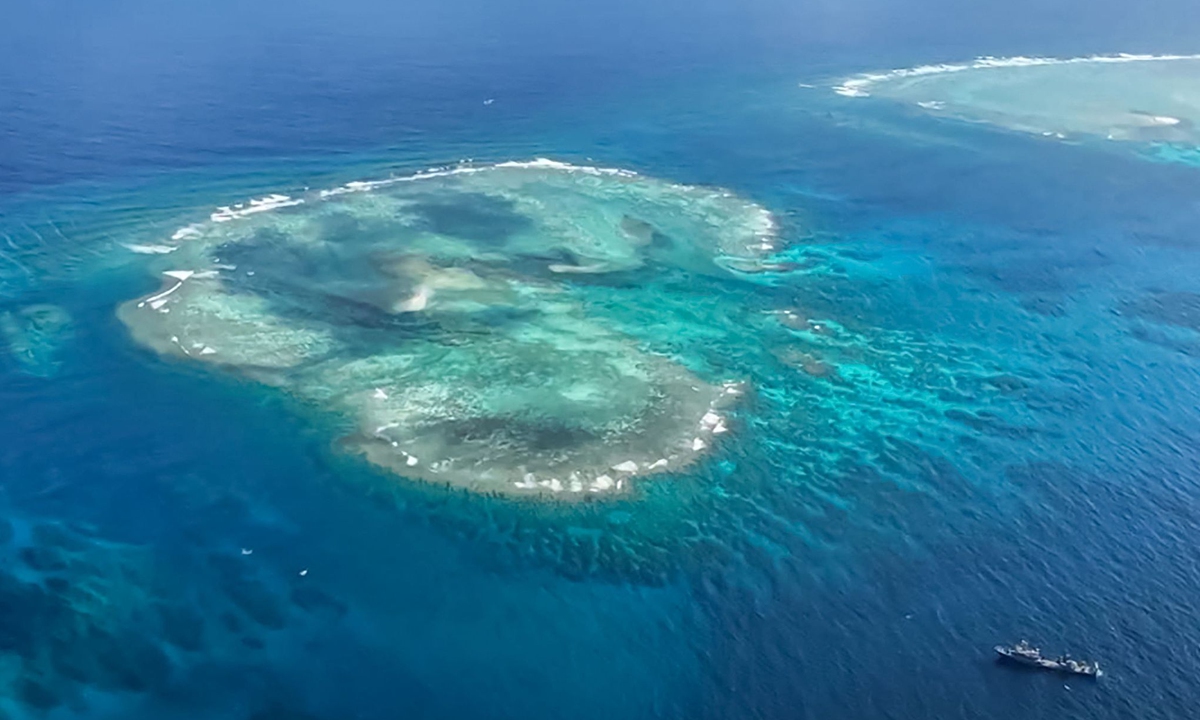
Tarriela also claimed that Chinese forces issued radio transmissions during the incident, claiming “indisputable sovereignty” over these areas, according to the report. The so-called “Kalayaan Island Group” is part of China’s Nansha Qundao in the South China Sea.
Last week, a Chinese Foreign Ministry spokesperson has accused the Philippines of illegally delineating the so-called “Kalayaan Island Group” beyond its own territorial scope and assigning names to Chinese islands and reefs in the Nansha Qundao, and said such acts violate China’s territorial sovereignty and are inconsistent with the purposes and principles of the UN Charter and relevant international laws.
By sending a coast guard aircraft into airspace under China’s jurisdiction, the Philippines violated China’s sovereignty and territorial integrity, regardless of its claimed purpose. In response, China was fully justified in taking the necessary measures to handle the situation. Whether through the use of flares or other countermeasures, such actions fall entirely within China’s sovereign rights. The Philippine side is merely trying to shift the blame and portray itself as the victim, Song Zhongping, a Chinese military affairs expert, told the Global Times.
Illumination flares, tracer rounds and similar measures are the restrained forms of warning. If the other side persists in actions that infringe on China’s sovereignty, China will respond with more resolute measures, said Song.
Ding Duo, director of the Research Center for International and Regional Studies at the National Institute for South China Sea Studies, also noted that “launching flares was already the most restrained response China could have taken. If no warning had been issued and the aircraft had continued to intrude, who would have taken responsibility if the situation had escalated into a dangerous incident?
“Commenting on the Philippines’ latest hype, the Beijing-based think tank South China Sea Strategic Situation Probing Initiative (SCSPI) wrote on X that “the PCG is playing with fire.” It said that the traditional practice in the Nansha Islands is for all parties to maintain a 12-nautical-mile control zone around the features they occupy and not challenge one another. “Since the Philippines insists on changing the status quo, it should not complain about the consequences.”
This is not the first time the Philippine side has hyped up China’s use of flares. On March 20, an ABS-CBN report claimed that “Chinese forces” also fired flares at a Philippine Coast Guard Cessna aircraft.
In response, in a statement released by the PLA Southern Theater Command (STC), Senior Captain Zhai Shichen, spokesperson for the command, said that on March 20, a Philippine C-208 aircraft illegally intruded into the airspace over waters adjacent to China’s Meiji Jiao in the Nansha Qundao without approval from the Chinese government. The PLA STC’s naval and air forces tracked and monitored the aircraft and issued warnings to expel it in accordance with laws and regulations.
The Philippine side’s actions constituted a serious violation of China’s sovereignty. “We solemnly warn the Philippine side to immediately cease all rights-infringing and provocative acts and to work with China to uphold peace and stability in the South China Sea,” said Zhai.
Ding believed that the Philippines had carried out such aircraft flights in coordination with a media hype campaign. The Philippine side knew China would respond and take necessary countermeasures, and that was precisely what it was hoping for — to generate fresh material for manipulation of public opinion.
With few recent maritime incidents to exploit, Manila appears to have deliberately staged this episode to create new talking points for its public opinion campaign.”The Philippine side says it wants to speed up Code of Conduct in the South China Sea consultations, yet continues to provoke tensions at sea and hype up claims of so-called Chinese ‘bullying.’
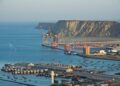
If it were truly serious about advancing the talks, it would be helping create a constructive atmosphere rather than undermining it,” said Ding. Also on Thursday, the Philippines unveiled a major coast guard base Thursday on an island in the South China Sea to serve as a “steadfast sentinel of sovereignty,” according to ABC News.
Song said the Philippine side is using frequent, low-intensity provocations to test China’s bottom line and red lines, pressing forward step by step while mistaking China’s restraint for weakness.
China has no intention of and will not “bully” any country, he said. But if the Philippine side continues to escalate and truly misreads China’s restraint as weakness, China will be compelled to take necessary measures in response, said the expert.