

By:Kokab Rathore

China consistently presents itself as a constructive force in global peace by advocating dialogue, diplomacy, and negotiated solutions to international conflicts. It emphasizes respect for state sovereignty, non-interference, and multilateral cooperation through international institutions.By promoting economic development, mediation efforts, and peaceful coexistence, China seeks to contribute to long-term global stability but this time China has to play for positive role for the betterment of the world.
Former President Donald Trump’s warning that the United States could impose a 25% tariff on countries maintaining commercial ties with Iran has introduced new uncertainty into Washington’s already fragile trade understanding with Beijing and Tehran’s most important economic partner. The proposal has raised concerns that renewed tensions could undo recent efforts to stabilize U.S.-China trade relations.
Speaking on last week in the United States, Trump announced that imports from countries engaging in business with Iran would face a 25 percent tariff, declaring the measure effective immediately via a post on his social media account. The announcement comes only months after the world’s two largest economies reached a provisional trade arrangement in late October, under which the United States eased certain punitive tariffs on Chinese goods while China suspended broad restrictions on rare earth exports.
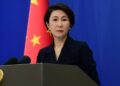
Beijing reacted sharply to Trump’s remarks, stating that it “firmly opposes unlawful unilateral sanctions and extraterritorial jurisdiction.” A spokesperson for the Chinese Embassy in Washington warned that China would take “all necessary measures” to safeguard its legitimate interests. Trade experts caution that if such tariffs are implemented, they would represent a dramatic escalation.
Deborah Elms, head of trade policy at the Hinrich Foundation, described the proposed rate as far higher than current levels and warned of a potential slide into renewed retaliatory actions. She noted that previous rounds of escalation had driven tariffs as high as 145%, while also undermining U.S. agricultural exports to China, including soybeans.
As the world’s largest oil importer, China has long purchased crude oil from Iran and other U.S.-sanctioned producers, providing a vital source of revenue for Tehran amid Western restrictions. Estimates from Kpler analyst Muyu Xu suggest that daily shipments of Iranian oil to China more than doubled between 2017 and 2024, reaching over 1.2 million barrels per day. World Bank data indicate that energy products accounted for more than half of China’s imports from Iran as of 2022.
More recently, however, China has scaled back trade with Iran as U.S. sanctions tightened. According to Chinese customs figures, imports from Iran were set to decline for a fourth consecutive year in 2025, falling 28 percent to $2.9 billion during the January–November period compared with the previous year. Full-year trade data are expected to be released shortly.Despite these trends, Chinese analysts argue that Beijing is unlikely to reduce its engagement with Iran in response to U.S. pressure.
Cui Shoujun, a professor of international studies at Renmin University of China, stated that China would not alter its economic cooperation with Tehran due to tariff threats. He described the Iran issue as entering a particularly volatile phase and suggested that Trump’s interest is closely tied to energy considerations, especially amid rising U.S. electricity demand driven by artificial intelligence development.
Although Cui avoided directly addressing the broader implications for U.S.-China relations, he emphasized the importance of high-level diplomatic engagement. Following a meeting between Trump and Chinese President Xi Jinping in South Korea last fall, both sides agreed to a one-year trade truce that reduced average U.S. tariffs on Chinese goods to around 47.5 percent, down from peak levels exceeding 100 percent earlier in the year.Trump is expected to travel to Beijing in April, with a reciprocal visit by President Xi anticipated later in the year. However, analysts warn that Trump’s latest statements risk undermining the fragile trust underpinning the truce.
Dan Wang, China director at Eurasia Group, noted that Trump is widely viewed in China as unpredictable, and that such moves could erode confidence ahead of planned talks.Historically, both Washington and Beijing have escalated pressure in the lead-up to major diplomatic engagements.
Prior to the October Trump-Xi meeting, China expanded export controls on rare earths and initiated antitrust investigations into U.S. chipmaker Qualcomm, while the United States reportedly considered restricting China’s access to chip-design software. Wang expects similar cycles of retaliation in the months leading up to the April meeting, potentially including Chinese sanctions on U.S. firms linked to arms sales to Taiwan or increased regulatory scrutiny of American technology companies operating in China.
Uncertainty also remains over whether Trump’s tariff proposal will ultimately be implemented. The U.S. Supreme Court is expected to rule on the legality of Trump’s use of trade duties, which could constrain his authority. Some analysts suggest the tariff threat reflects Trump’s shifting priorities rather than a calculated strategy aimed at gaining leverage over China ahead of upcoming talks. Scott Kennedy, a senior adviser at the Center for Strategic and International Studies, described the move as driven more by impulse than long-term planning. Nonetheless, he cautioned that China is prepared to respond forcefully if necessary and would not hesitate to impose significant costs on the United States should tensions escalate.
[The writer is a Research Scholar, and working as an Anchor Person in State Media in Pakistan. He is a Vlogger and Freelancing Journalist. He can be reached at kokab.raathore@gmail.com]