

Beijing: China has rejected India’s claim over the Shaksgam Valley in the Kashmir region, asserting that the territory belongs to Beijing and that its infrastructure activities there are legitimate.
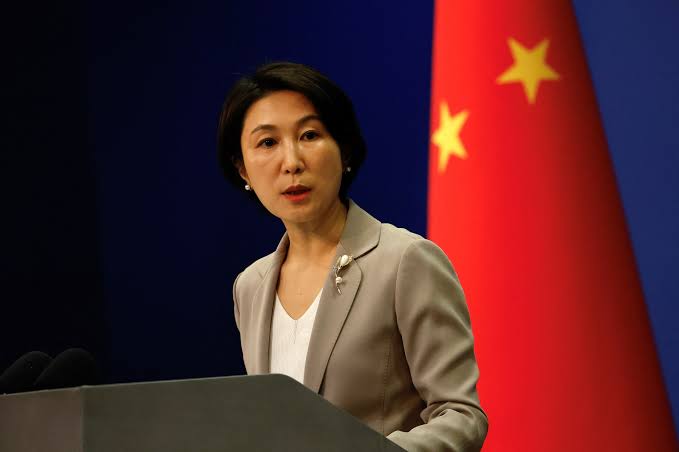
Speaking at a regular press briefing on Monday, Chinese Foreign Ministry spokesperson Mao Ning responded to Indian criticism of China’s infrastructure development in the area, saying it was “fully justified” for China to carry out construction on what she described as its own territory.“The territory you mentioned belongs to China,” Mao said in response to a question from India’s Press Trust of India (PTI).
India’s Ministry of External Affairs had earlier reiterated its claim over the Shaksgam Valley, calling it “Indian territory” and reserving the right to take necessary measures to safeguard its interests. New Delhi has consistently rejected the 1963 China-Pakistan boundary agreement, under which Pakistan ceded control of the valley to China, calling the agreement “illegal and invalid.”India has also said it does not recognise the China-Pakistan Economic Corridor (CPEC), which passes through parts of this region.
An Indian foreign ministry spokesperson said that the entire regions of Jammu and Kashmir and Ladakh are “integral and inalienable” parts of India and that New Delhi has repeatedly protested against attempts to alter the status quo in Shaksgam Valley. Responding to these remarks, Mao Ning said China and Pakistan, as sovereign states, had lawfully signed a boundary agreement in the 1960s and clearly demarcated their border. She added that CPEC is an economic cooperation initiative aimed at promoting development and improving livelihoods.“The China-Pakistan boundary agreement and CPEC do not affect China’s position on the Kashmir issue, which remains unchanged,” she said.
India and China have a long history of border disputes. While both sides reached an agreement last year to reduce military tensions along their Himalayan frontier following the deadly 2020 clash, territorial disagreements persist. The two countries continue to spar over several regions, including India’s northeastern state of Arunachal Pradesh, which China refers to as Zangnan and claims as part of South Tibetan assertion India has repeatedly rejected.