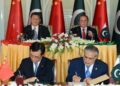

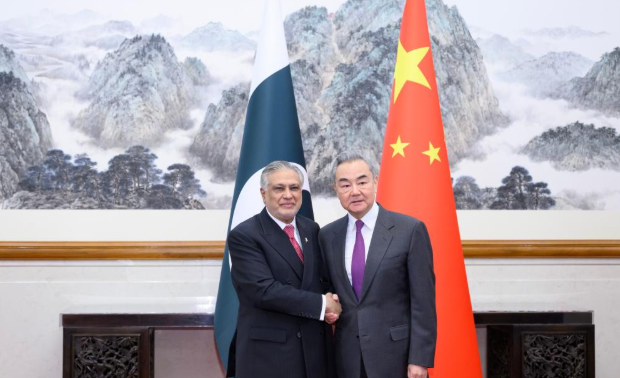
BEIJING: China and Pakistan have reaffirmed their all-weather strategic cooperative partnership at the beginning of 2026 at the Seventh Round of the China-Pakistan Foreign Ministers’ Strategic Dialogue, held in Beijing, as both countries formally launched activities to commemorate the 75th anniversary of the establishment of diplomatic relations.

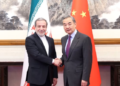
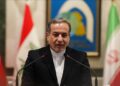
The dialogue was co-chaired by Chinese Foreign Minister Wang Yi, a member of the Political Bureau of the CPC Central Committee, and Pakistan’s Deputy Prime Minister and Foreign Minister Ishaq Dar. The meeting resulted in wide-ranging consensus on strengthening bilateral ties, accelerating economic cooperation, enhancing security coordination, and deepening collaboration at regional and global levels.
75 Years of “Ironclad” Friendship
Both sides highlighted that since the establishment of diplomatic relations in 1951, China and Pakistan have stood together through changing global and regional circumstances, forging what is widely described as an “ironclad friendship.” From mutual support for sovereignty and independence to joint efforts in development and people’s welfare, the relationship has evolved into a model of friendly coexistence and win-win cooperation between countries with different social systems and levels of development.
Officials noted that the launch of anniversary activities aims to draw strength from shared history while ensuring that the legacy of China-Pakistan friendship is carried forward by future generations.
Firm Mutual Support on Core Interests
A joint press communiqué reaffirmed Pakistan’s firm adherence to the One-China Principle, recognizing Taiwan as an inseparable part of China’s territory and opposing any form of “Taiwan independence” or attempts to create “two Chinas” or “one China, one Taiwan.” Pakistan reiterated its support for China on issues related to Xinjiang, Xizang, Hong Kong, and the South China Sea.
China, in turn, reiterated its unwavering support for Pakistan’s sovereignty, independence, and territorial integrity, its development path suited to national conditions, and its resolute fight against terrorism. Both sides stressed that mutual support on core interests is not symbolic but a strategic and long-term commitment, setting an example of respect for sovereignty, equality, and non-interference in international affairs.
CPEC Moves into ‘2.0’ Phase
One of the most significant outcomes of the dialogue was the agreement to advance a “2.0 upgraded version” of the China-Pakistan Economic Corridor (CPEC). While the initial phase focused largely on infrastructure connectivity, the new phase will prioritize industrial cooperation, agriculture, and mining, alongside livelihood improvement and capacity building.
Both sides underscored the importance of the continued construction and operation of Gwadar Port, ensuring smooth traffic along the Karakoram Highway, and fully utilizing the year-round operation of the Khunjerab-Sost border crossing to expand trade, economic activity, and cultural exchanges.
China reaffirmed that CPEC would continue to follow the principles of consultation, joint construction, and shared benefits, and welcomed third-party participation based on mutual agreement, highlighting the corridor’s role as a public good under the Belt and Road Initiative.
Expanding People-to-People and Youth Exchanges
Recognizing that the foundation of bilateral relations lies with the people, both governments emphasized strengthening youth exchanges, education cooperation, scientific research, and cultural interaction. The two sides agreed to organize a series of people-to-people and cultural activities throughout 2026 to further deepen mutual understanding and emotional bonds between the two nations.
Security Cooperation and Counter-Terrorism
Security cooperation, particularly counter-terrorism, featured prominently in the dialogue. China and Pakistan reaffirmed a zero-tolerance approach to terrorism and agreed to further strengthen comprehensive counter-terrorism and security cooperation to safeguard regional peace and ensure the smooth implementation of Belt and Road projects.
China acknowledged Pakistan’s significant sacrifices and contributions in combating terrorism, while both sides firmly opposed double standards in international counter-terrorism efforts.
Regional Cooperation and Stability
At the regional level, both countries emphasized that peace, stability, and prosperity in South Asia are in the shared interest of all regional states. They reaffirmed that all disputes should be resolved through dialogue and consultation in accordance with the UN Charter, and opposed unilateral actions that escalate tensions.
The dialogue reviewed progress under regional mechanisms, including the China-Afghanistan-Pakistan trilateral foreign ministers’ dialogue, which has held six rounds and produced outcomes in counter-terrorism cooperation, Afghan reconstruction, and regional connectivity. Both sides agreed to further strengthen this mechanism.
Progress in China-Bangladesh-Pakistan trilateral cooperation was also noted, following the first vice-ministerial-level meeting held in Kunming in June 2025, aimed at enhancing trade, supply chain connectivity, and industrial cooperation in South Asia.
Global Coordination and Multilateralism
On global issues, China and Pakistan reaffirmed their commitment to genuine multilateralism, opposition to unilateralism, protectionism, and “bloc confrontation,” and support for a fairer and more inclusive global governance system.
Both sides pledged to uphold the outcomes of World War II, defend the purposes and principles of the UN Charter, and oppose attempts to distort historical facts or revive fascism and militarism. They also exchanged views on international hotspots, calling for:
- An inclusive, development-focused approach to Afghanistan;
- An unconditional and permanent ceasefire in Gaza;
- Support for the Palestinian people’s right to self-determination and the two-state solution.
China and Pakistan reaffirmed close coordination within multilateral forums such as the United Nations and the Shanghai Cooperation Organisation, and expressed support for the Global Development Initiative, Global Security Initiative, Global Civilization Initiative, and Global Governance initiatives.
Looking Ahead
As China and Pakistan enter the next phase of their partnership, both sides expressed confidence that the implementation of the Action Plan to Build an Even Closer China-Pakistan Community with a Shared Future (2025–2029) and the accelerated rollout of CPEC 2.0 will further strengthen bilateral relations.
Officials concluded that the 75-year-old China-Pakistan relationship continues to serve as a model of mutual trust, respect, and win-win cooperation, and will keep injecting stability and positive energy into regional peace and global development.