

Chinese Premier Li Qiang has signed a State Council decree introducing new regulations aimed at safeguarding China’s industrial and supply chains. The rules, which came into effect immediately upon release on Tuesday, are designed to strengthen resilience, reduce risks, and ensure economic stability and national security.

Comprising 18 articles, the regulations come at a time when global supply chains are under pressure from geopolitical tensions and evolving trade dynamics. A key component of the framework is a review mechanism that allows authorities to assess risks linked to foreign governments, organizations, or individuals, and take countermeasures if China’s industrial or supply chain security is threatened.
Chinese experts described the move as the country’s first dedicated administrative regulation focused on industrial and supply chain security. They noted that it introduces the principle of “reciprocal countermeasures” as a way to respond precisely to unilateral bullying.
According to Zhang Xiaorong, director of a Beijing-based cutting-edge technology research institute, the rules respond directly to actions by the US and some Western countries, including chip restrictions, technological blockades, and supply chain disruptions. He added that the regulations empower authorities to impose measures such as trade restrictions, additional fees, and sanctions lists, signaling that coercive actions will not be tolerated.
The framework outlines two main scenarios for launching security investigations: when foreign entities impose discriminatory restrictions that violate international norms, and when their actions disrupt normal transactions or pose significant risks to China’s supply chain security.
Under the new system, relevant government departments can take countermeasures such as restricting imports and exports, limiting trade in services, imposing special fees, and barring foreign entities from investment or trade activities related to China. The regulations also introduce a comprehensive mechanism covering data sharing, risk monitoring, early warning, prevention, and emergency response to ensure stable operations across key sectors.
International observers have also taken note of the development. A report by Bloomberg highlighted that the rules grant authorities the power to initiate security probes into foreign governments and organizations over discriminatory measures or actions that harm China’s supply chains.
“Part of the intent is clearly to provide another legal basis for officials to respond to foreign sanctions, export controls or other restrictions on China,” said Christopher Beddor, deputy China research director at Gavekal Dragonomics. “It’s part of a broader build-out of laws and regulations that has been underway for years.”
Experts say the regulations also help clarify boundaries for foreign businesses and governments, discouraging discriminatory practices while stabilizing expectations for global supply chain cooperation.
“The regulations serve as a clear warning to certain countries, regions, international organizations, entities, and individuals: Do not attempt to adopt discriminatory measures against China and endanger the security of China’s industrial and supply chains in key sectors. Otherwise, China has the right to include the relevant organizations and individuals on its sanction lists or unreliable entity lists,” said Shi Xiaoli, director of the WTO Law Research Center at China University of Political Science and Law.
Shi also noted that the new framework integrates existing legal tools, significantly expanding the scope and strength of countermeasures compared to earlier laws such as the Anti-Foreign Sanctions Law and Export Control Law.
Zhang added that the term “discriminatory prohibitions and restrictions” broadly covers targeted actions like chip bans, giving China a clearer legal basis to respond.
“The current industrial and supply chain environment is highly complex, and countries are taking various measures to protect their own chains. For China, a major manufacturing country with a vast market and population, protecting industrial and supply chain security is extremely important,” said Zhou Mi, a senior research fellow at the Chinese Academy of International Trade and Economic Cooperation.
Experts emphasized that the regulations will also support high-level opening-up by balancing development with security. Article 2 of the rules highlights the need to coordinate both, while ensuring stable and smooth global supply chain operations.
“China’s reform and opening-up policy will remain unchanged. The country will continue to further expand opening-up and proactively align with high international standards,” Shi said.
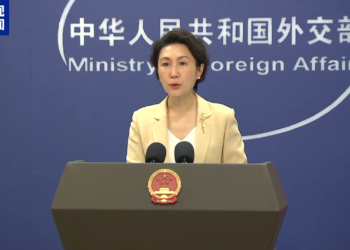
A foreign ministry spokesperson also noted that China remains committed to openness, with continued emphasis on international cooperation in science and technology.