
The Taiwan region and the US have reportedly agreed to jointly produce an attack drone known as the Chien Feng I (Mighty Hornet I). The Taiwan region has also reportedly decided to purchase dozens of unmanned surface vessels and unmanned underwater vehicles incorporating US technology as part of its efforts to counter the Chinese mainland, according to reports by Taiwan-based media outlets including Taipei Times.

A mainland military expert said the US is pursuing a “node strategy” aimed at building an intelligence-gathering network around China. In essence, the US plan is designed to have the Taiwan regional authorities foot the bill while the US reaps the benefits. The expert said such network would not pose a substantive threat to the People’s Liberation Army (PLA), but would instead push the Taiwan region closer to the front line, with ordinary people on the island ultimately bearing the consequences.
The “Mighty Hornet I,” which is in service with the Marine Corps, has passed live-fire tests, including being launched from fast-moving surface ships, according to The Taipei Times on Thursday.
The collaboration on producing the attack drone, however, still must undergo a security review and receive budget approval, and the US would reportedly act as the representative for overseas sales, according to the report.
Meanwhile, another report from Nikkei Asia on Wednesday said that the Taiwan regional authorities are set to procure 25 uncrewed surface vessels and two unmanned underwater vehicles for its coast guards from the Chung-Shan Institute of Science and Technology, which will work with US company Maritime Tactical Systems, according to the report.
Song Zhongping, a mainland military affairs expert, told the Global Times on Thursday that the Taiwan region lacks strategic depth, making infrastructure associated with the “node strategy,” including drone bases, command centers and data centers, easy targets for strikes and electronic disruption.
Earlier, the Taiwan regional military force purchased a batch of US-made MQ-9B drones, which arrived in the Taiwan region in June, according to Taiwan’s Central News Agency, citing sources in a report on June 21.
Song said that while US drone technology is advanced, US-made drones have repeatedly been shot down in the Russia-Ukraine conflict and the Middle East, showing that their battlefield performance has fallen short of expectations. The high cost and poor cost-effectiveness of the MQ-9, for example, also limit its military value, making the “node strategy” largely unworkable.
Song noted that the entire Taiwan region is within the PLA’s full-range strike coverage. It is therefore unrealistic for the Taiwan regional authorities to develop an “asymmetric warfare capability” by cooperating with the US in fields such as drone technologies, he said, adding that their only way forward is to abandon attempts to seek “Taiwan independence.”
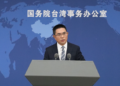
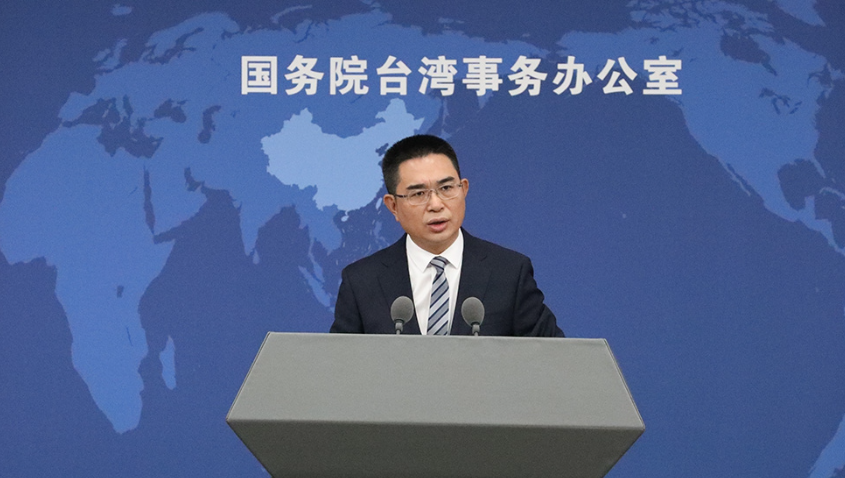
Responding to claims made by the American Institute in Taiwan’s Raymond Greene that nothing would be more effective in deterring conflict than turning Taiwan into a “hive” filled with drones operating in the air, on the sea surface and underwater, Chen Binhua, a spokesperson for the State Council Taiwan Affairs Office, said that Greene’s claims run counter to US President Donald Trump’s public stance after his visit to China in May, undermine peace and stability across the Taiwan Straits, and seek to steer both China-US relations and cross-Straits relations in an extremely dangerous direction.