
Amid a turbulent international landscape, Chinese Foreign Minister Wang Yi arrived in New Delhi to attend the 16th Meeting of BRICS National Security Advisors and High Representatives on National Security, being held from Monday to Tuesday. Analysts expect the gathering to help forge greater consensus among member states and contribute to long-term stability in global governance.

According to India’s Ministry of External Affairs, the meeting is chaired by Shri Ajit Doval, KC, National Security Adviser of India. National security advisers and heads of delegation are discussing the rapidly evolving nature of security challenges, the role of new technologies in emerging threats, and reviewing the outcomes of recent BRICS joint working groups on counter-terrorism and security in the use of information and communication technologies.
In addition to Wang Yi, who is also a member of the Political Bureau of the Communist Party of China Central Committee, senior delegates attending the meeting include Russian Security Council Secretary Sergei Shoigu and Qadir Nizamipour, deputy secretary of Iran’s Supreme National Security Council.
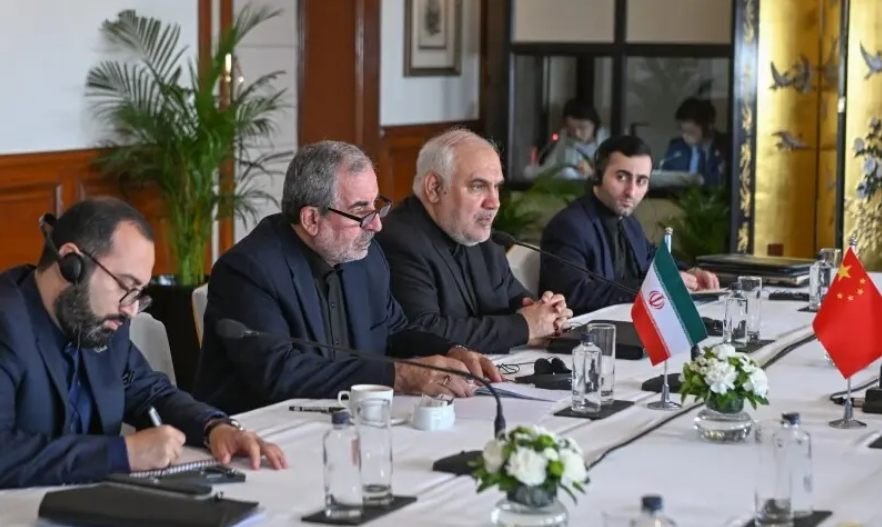
During a meeting with Nizamipour on Monday, Wang Yi said that China, as a comprehensive strategic partner of Iran, has consistently maintained a fair position, supported efforts conducive to peace, backed Iran in safeguarding its sovereignty, security and national dignity, and encouraged improved relations between Iran and regional countries, according to Xinhua News Agency.
Nizamipour briefed Wang on the latest developments in the Middle East and the negotiations between Iran and the United States. He expressed hope that China would continue to play an important role in facilitating the effective implementation of the first-phase memorandum of understanding between Iran and the US.
Nizamipour said that Iran has always attached great importance to its relationship with China and highly appreciates the constructive role Beijing has played in international and regional affairs. He added that deepening the comprehensive strategic partnership between the two countries remains a broad consensus across Iran.
Iran firmly adheres to the one-China principle and is willing to further enhance exchanges at all levels with China, strengthen mutual support, tap cooperation potential, and enhance collaboration under multilateral frameworks such as BRICS to jointly address common challenges, Nizamipour said.
The latest BRICS security meeting follows the G7 summit in France and recent US-Iran negotiations in Switzerland. Indian media have described the gathering as one of the flagship security-track events of India’s 2026 BRICS Chairship and an important step toward preparations for the 18th BRICS Summit, which India will host in New Delhi later this year.
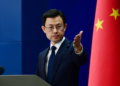
“Amid a transforming and volatile world with various types of security challenges on the rise, BRICS countries, standing at the forefront of the Global South, are committed to safeguarding world peace, promoting common development, practicing multilateralism, and enabling more just and equitable global governance,” Chinese Foreign Ministry spokesperson Lin Jian said at a previous press briefing.
“China looks forward to enhancing communication and coordination with BRICS members at the meeting to further enrich political and security cooperation and contribute to world peace and security,” Lin added.
Against a backdrop of growing geopolitical risks, renewed unilateralism and increasing global instability, BRICS members are placing greater emphasis on security cooperation, Wang Youming, Director of the Institute of Developing Countries at the China Institute of International Studies in Beijing, told the Global Times on Monday.
According to Wang, existing Western-led approaches to managing geopolitical crises have struggled to adapt to changing global realities and have not gained broad support among many Global South nations. He argued that BRICS seeks to address regional conflicts by tackling underlying causes, taking into account the legitimate security concerns of all parties, and avoiding bloc politics and double standards.
Under such circumstances, BRICS is pioneering a new sustainable security cooperation architecture that is fair, reasonable and considerate of all parties’ interests, which embody the core concepts of China’s Global Development Initiative and Global Security Initiative for defusing regional flashpoints and properly handling geopolitical disputes, said Wang Youming.
BRICS members have maintained intensive diplomatic engagement in recent months. Prior to the current security meeting, foreign ministers from BRICS countries met in India in May to exchange views on major global and regional issues. Earlier, deputy foreign ministers and special envoys from BRICS countries held consultations on Middle East affairs in New Delhi on April 23–24.
With BRICS countries now representing nearly half of the world’s population and around 40 percent of global GDP, the bloc’s ability to reach consensus on security issues could have a broader impact on debates surrounding global governance, according to The Times of India.
Indian broadcaster NDTV reported that BRICS is increasingly regarded as an important platform for addressing global governance challenges and promoting cooperation among major emerging economies. The outlet noted that the meeting’s outcomes are expected to contribute to wider BRICS discussions on peace, stability and collective responses to emerging security threats, reinforcing the bloc’s commitment to multilateral cooperation.
“Two fundamental shifts are reshaping global security governance,” Wang Youming said.
“For one thing, the old ‘center-periphery’ order monopolized by a handful of Western powers is giving way to a new model featuring extensive consultation, joint contribution and shared benefits… For another, the Global South, once the silent majority on the international stage, is moving toward the center of global governance, autonomously participating in and shaping international agendas,” the expert said.