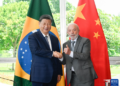


CHINA / DIPLOMACY: Spanish Prime Minister Pedro Sánchez’s ongoing visit to China has drawn attention to the steady development of China–Spain relations, with experts highlighting the consistency of high-level exchanges between the two countries.

During his current five-day official trip, Sánchez—who is visiting China for the fourth time in four years was seen by tourists at several popular Beijing landmarks, including the Drum Tower, the Summer Palace, and Shichahai lake. Video footage shared by Beijing Radio and Television Station (BRTV) showed him walking among visitors at the Summer Palace, dressed casually in a blue jacket and jeans. Reports also confirmed that he visited the Drum Tower the day before.
Sánchez and his wife arrived in Beijing on Saturday, according to China News Service, marking the start of his official agenda.
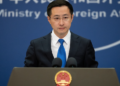
Responding to questions about the visit, Chinese Foreign Ministry spokesperson Mao Ning said on April 8 that the trip would provide an opportunity for both sides to strengthen strategic trust, deepen cooperation, and enhance coordination on global issues, ultimately helping elevate bilateral relations and contribute to global peace and stability.
Spanish media outlets noted the unusually high frequency of Sánchez’s visits, with El Mundo reporting that no other European leader has traveled to China as often within the same timeframe.
Experts said the repeated visits reflect the stability of China–Spain relations. Cui Hongjian of Beijing Foreign Studies University noted that sustained high-level engagement has played a key role in maintaining steady bilateral ties. Similarly, international relations expert Jordi Bacaria emphasized that long-term diplomatic effort, rather than short-term actions, has shaped the relationship.
International media also highlighted the economic dimension of the visit. Reuters noted that Sánchez’s trip aims to strengthen commercial ties with China, while Spanish media reported that Spain is seeking both increased exports and more substantive Chinese investment involving technology transfer and integration into local industries.
Trade between the two countries reached over $55 billion in 2025, marking a 9.8% year-on-year increase, according to China’s customs data.
Spanish outlets also reported that technology and innovation cooperation are central to the visit, with Sánchez scheduled to meet representatives from sectors including energy, telecommunications, automotive, and technology. His itinerary includes visits to Tsinghua University, the Chinese Academy of Sciences, and Xiaomi’s headquarters, along with discussions with investors and business groups.
Experts in China noted that the focus on innovation reflects Spain’s interest in expanding cooperation in areas such as artificial intelligence, big data, 5G, and green technology.
Some Spanish media linked the visit to shifting global dynamics, including US trade protectionism and evolving EU–US relations, suggesting that European countries are increasingly looking to balance relations between major global partners.
Analysts also observed that several European leaders have visited China since early 2026, reflecting broader diplomatic engagement trends. Experts argue that this shift reflects Europe’s effort to diversify partnerships and maintain economic balance in an increasingly complex global environment.