
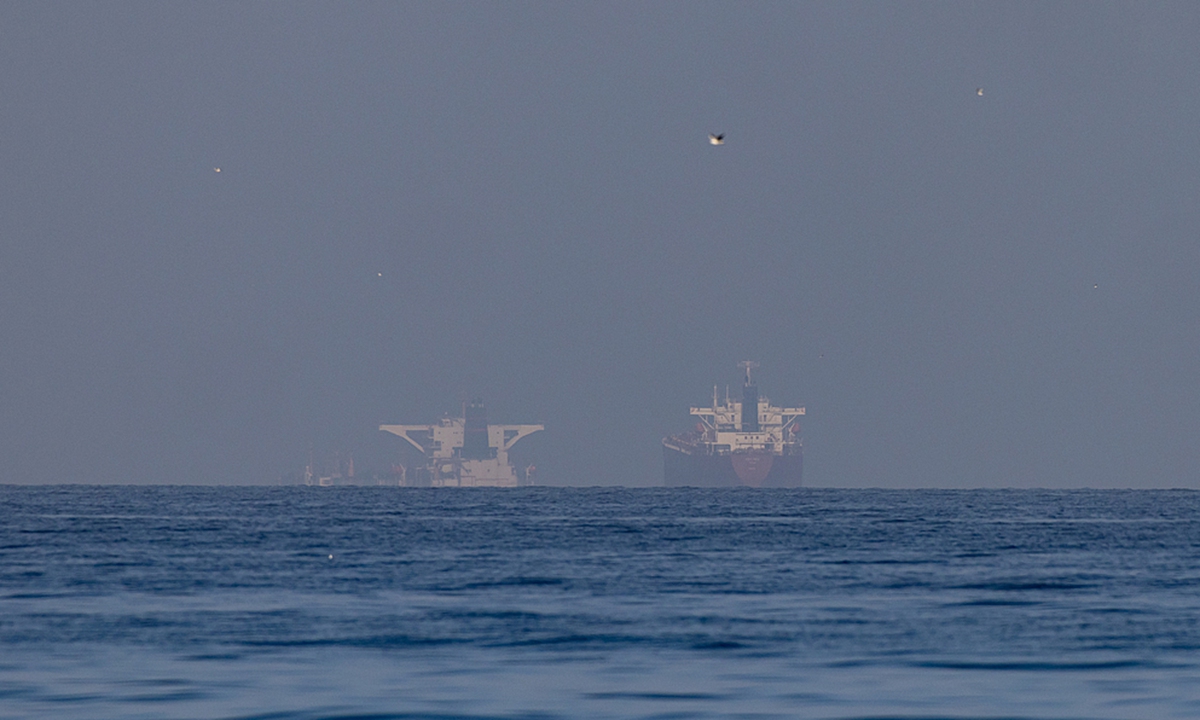
Global Times: As the US-Israeli war against Iran has led to the closure of the Strait of Hormuz, the UN Security Council is scheduled to vote Friday on a resolution to reopen the critical waterway, but the wording of authorizing the use of force in opening the strait has reportedly met opposition from China, Russia, and France, the three permanent members of the Security Council. Analyst said authorizing regional nations to use force to open Hormuz could further expand the war’s scope and complexity. He noted that rising tensions hurt Gulf nations’ interests but Washington appears intent on forcing Gulf countries to shoulder the burden of its confrontation with Iran.

The final draft of Bahrain’s resolution, obtained Thursday by The Associated Press (AP), authorizes the use of defensive action to ensure vessels can safely transit the strait. In a previous AP report, the initial draft resolution would have allowed countries “to use all necessary means,” which would include possible military action in the Strait of Hormuz, to secure passage and deter attempts to interfere with navigation. Bahrain currently holds the rotating presidency of the Security Council for April. The New York Times said that the resolution was supported by Arab countries in the Persian Gulf.Ahead of the vote, China, Russia and France, permanent members of the Council with veto power, have voiced opposition to the use of force and called for de-escalation.
Speaking to the UN Security Council earlier on Thursday, Chinese UN ambassador Fu Cong said that under the current circumstances, authorizing member states to use force would essentially legitimize the illegal and abusive use of force, which would inevitably lead to further escalation of the situation and cause serious consequences. Fu urged the Security Council to “act with caution” and play a positive role in de-escalating the situation and restoring dialogue and negotiations. He also noted that China does not endorse Iran’s attacks on Gulf Cooperation Council (GCC) countries and condemns all indiscriminate attacks on innocent civilians and non-military targets, adding that the safety of maritime waterways must not be disrupted.
During a phone call with the High Representative for Foreign Affairs and Security Policy of the European Commission Kaja Kallas on Thursday night, Chinese Foreign Minister Wang Yi also said that UN Security Council actions must not provide legal cover for unauthorized military operations, nor should they heighten tensions or escalate conflict. Russia’s UN ambassador Vassily Nebenzia said the proposal “does not solve the puzzle,” and what would do so is ending hostilities, according to the AP. He called on the US and Israel to “stop playing with fire,” per the Al Jazeera.
French President Emmanuel Macron also said on Thursday it would be unrealistic to launch a military operation to force open the Strait of Hormuz, after US President Donald Trump challenged US allies to work toward reopening it, Reuters reported.
“China’s opposition to the use of force is based on the fundamental principles of the UN Charter. The right path to resolution still lies in achieving a ceasefire and then addressing the issue through political means,” Zhu Yongbiao, a Middle East affairs expert with Lanzhou University, told the Global Times on Friday. “The root cause of the issue regarding the Strait of Hormuz lies in the attacks by the US and Israel against Iran,” Zhu said, “The parties that initiated the war should bear greater responsibility.”
In addition to the opposition from major powers, there were also divisions among the 10 nonpermanent members, said the New York Times, citing a diplomat. Analysts were quoted by the New York Times as saying that the Bahraini-led efforts at the Council are more symbolic than pragmatic; the militaries of most of the Persian Gulf countries are relatively small, and heavily dependent on US support.
“This approach in the draft is neither rational nor realistic,” said Zhu, “For example, issues such as the proportion of troops each country would contribute to a joint escort mission, and how losses would be shared in the event of retaliation by Iran, would be extremely difficult to reach consensus on.” Moreover, the expert said that it would likely trigger retaliatory actions by Iran, further expanding the war’s scope and complexity, and increasing the uncontrollable risks to the regional situation.
According to the expert, escalation of tensions with Iran does not serve the interests of any party in the Middle East. But the US seems to be eager to get more countries involved to share its burden.
During his speech on Wednesday, Trump blamed recent fuel price increases on Iranian attacks on oil shipping and stressed the importance of keeping key maritime routes open. He also claimed that securing the waterway is not America’s job and told US allies to “go get your own oil,” and take greater responsibility for protecting critical shipping lanes. Washington appears intent on forcing Gulf countries to shoulder the burden of its confrontation with Iran, said Zhu.
The US and Israel carried out two strikes early Thursday on the B1 bridge, a vital transport link in Karaj in Alborz province in Iran, killing at least two people and destroying it, according to the Anadolu Agency. The US media Axios said it was the first attack targeting major civilian infrastructure in Iran. UN chief Antonio Guterres on Thursday issued a stark warning regarding the deteriorating situation in the Middle East, calling for an immediate end to the “spiral of death and destruction”.
Ali Vaez, the Iran director at the International Crisis Group, said that the closure of the Strait of Hormuz is a result of the war and that it had been open before the strikes, according to a New York Times report. “It treats a political crisis as if it can be solved at gunpoint,” said Ali Vaez.