
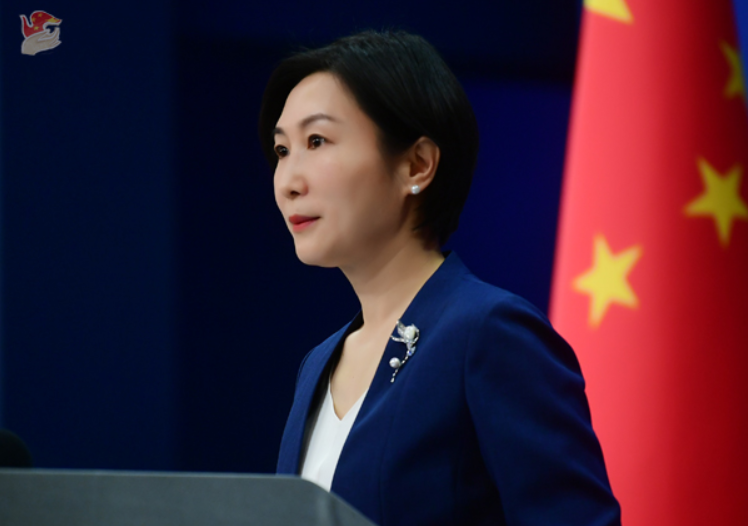
Global Times: When asked about the visit by four US senators to the Taiwan region, Chinese Foreign Ministry spokesperson Mao Ning said on Monday that China has all along opposed official contact between the US and China’s Taiwan region, and has lodged serious protests with the US side.

The US should abide by the one-China principle and the three China-US joint communiqués, handle the Taiwan question prudently and properly, stop any form of official contact with China’s Taiwan region, stop sending any wrong message to “Taiwan independence” separatist forces, and take concrete actions to uphold the overall China-US relations and peace and stability in the Taiwan Straits, Mao added.
“China’s position on issues related to China’s Taiwan region is consistent and clear. We will do what is necessary to firmly safeguard our sovereignty and territorial integrity,” the spokesperson added.
A delegation from the US Senate Foreign Relations Committee arrived in the Taiwan region early Monday, reportedly to press Taiwan region’s lawmakers to pass a proposed defense spending bill worthy $40 billion, according to multiple media outlets.
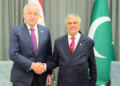
Led by Democratic Senator Jeanne Shaheen and Republican Senator John Curtis, the group arrived at Taipei early Monday morning, per CNA.
The budget was previously proposed by Taiwan regional leader Lai Ching-te to fund the construction of a so-called “T-Dome” air defense network, according to Focus Taiwan.
Chen Binhua, a spokesperson for the Taiwan Affairs Office of the State Council, also responded to the proposed budget in February, stressing that no matter how the DPP authorities package their rhetoric, allocate budgets, or purchase weapons, they cannot change the inevitable demise of “Taiwan independence” nor stop the general trend of the inevitable reunification of the motherland.
Since the budget was proposed, it has sparked skepticism and criticism on the island in recent months, with many questioning its transparency. KMT’s legislative caucus whip Fu Kun-chi previously criticized the budget as being akin to “demanding a blank check while the public remains in the dark”, Taipei Times reported.
Opposition lawmakers from the Chinese Kuomintang party (KMT) and Taiwan People’s Party (TPP) have repeatedly joined forces to block the version of “Executive Yuan” for the special defense budget bill, according to local media reports.
Curtis claimed in the interview with the Financial Times that the timing of the visit was particularly important because of the stalling of the defense spending bill. He added that even if the trip achieved nothing else, simply stressing how important the bill is would, by itself, be a big reason for going.
Admittedly, Washington’s so-called support for Taiwan region is merely rhetorical, apart from forcing the island to spend heavily on American weapons, said Zhang Wensheng, deputy dean and professor at the Taiwan Research Institute of Xiamen University, adding that the essence of this visit is still to serve US interests, as Washington is concerned that losing this arms deal could hurt its own economic benefits.
On Sunday, the US agreed to defer Taiwan’s first payment for 82 High Mobility Artillery Rocket Systems until it has completed negotiations with contractors, according to Taipei Times. Washington is expected to complete negotiations with contractors by the end of May, the report noted citing a Taiwan regional authority, adding that the legislature should therefore make haste in finalizing the special defense budget to prevent more issues from arising.
For the Taiwan regional authorities, the DPP has been scrambling to comply with US arms purchase demands and increase relevant spending to curry favor with the US. The DPP authorities also hope to use this opportunity to have Washington directly pressure opposition parties in Taiwan region, Zhang told the Global Times.
While a latest post by the spokesperson of the regional authorities on Monday claimed that the delegation with lawmakers from both the Democratic and Republican parties in the Taiwan region fully reflects the two sides’ “close interactions”, the Chinese expert said the visit this time is little more than a political show.
“Verbal support by the US side only offers psychological encouragement to ‘Taiwan independence’ separatist forces on the island, and the visit this time is essentially a political spectacle staged jointly by certain US lawmakers and the DPP authorities,” Zhang said.
By disregarding local people’s livelihood and squandering their hard-earned money on arms purchases, the DPP authorities will only court their own doom, Zhang added.