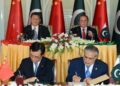

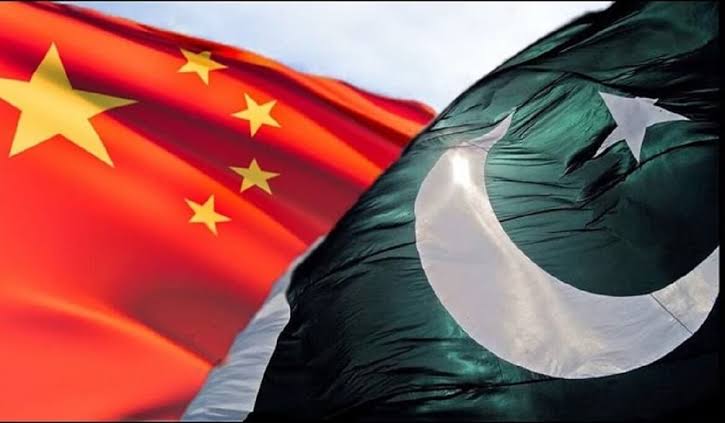
On January 4, 2026, Member of the Political Bureau of the CPC Central Committee and Foreign Minister Wang Yi held the Seventh Round of China-Pakistan Foreign Ministers’ Strategic Dialogue in Beijing with Pakistan’s Deputy Prime Minister and Foreign Minister Dar. The China-Pakistan Foreign Ministers’ Strategic Dialogue is one of the high-level consultation mechanisms between the two countries.

Convened on the eve of the 75th anniversary of the establishment of diplomatic relations between China and Pakistan, Deputy Prime Minister and Foreign Minister Dar is the first foreign minister hosted by China in 2026, underscoring the unique friendly relationship between the two countries.
Two dialogues within five months, accelerating high-level interactions
The Seventh Round of China-Pakistan Foreign Ministers’ Strategic Dialogue comprehensively reviewed and evaluated bilateral cooperation. The two countries announced the launch of a series of activities in 2026 to commemorate the 75th anniversary of diplomatic relations.
They also identified new areas of future cooperation across multiple dimensions, including an upgraded version of the China-Pakistan Economic Corridor, counter-terrorism cooperation, regional security collaboration, and global governance. These efforts aim to accelerate the construction of a closer China-Pakistan community with a shared future and position it at the forefront of such communities among neighboring nations.
The Seventh Round of China-Pakistan Foreign Ministers’ Strategic Dialogue, held less than five months after the sixth, demonstrates that amid the complex and evolving international landscape and against the backdrop of numerous uncertainties in global and regional security, high-level interactions between China and Pakistan are accelerating. This reflects the firm resolve of both nations to deepen strategic cooperation and safeguard shared interests.
Following Pakistan’s passage of the 27th Constitutional Amendment in November 2025, the political leadership of the Pakistani government and military has been strengthened, leading to increased stability in the country’s domestic political situation and an improvement in its macroeconomic conditions. However, Pakistan still faces significant challenges in its economic development.
A potential deterioration in the economic situation could pose substantial challenges to the credibility and governance capabilities of the Pakistani government and military. The construction of the China-Pakistan Economic Corridor (CPEC) serves as a primary engine for Pakistan’s economic growth. During this dialogue, the two sides agreed to deepen the alignment of their development plans and priority areas, establish an “upgraded version 2.0” of CPEC, focus on the three key sectors of industry, agriculture, and mining, optimize the development and operation of Gwadar Port, ensure the smooth flow of the Karakoram Highway, and enhance Pakistan’s capacity for sustainable development.
The shift of CPEC 2.0 toward industrial transfer and technological upgrading, particularly its expansion into emerging sectors such as agriculture, IT, and mining, aligns with Pakistan’s urgent need for economic transformation under its “Pakistan’s Rise” development plan. Pakistan’s development strategy centers on macroeconomic stability and the improvement of people’s livelihoods, while China supports this vision through long-term commitments such as CPEC 2.0.
However, it should also be noted that there have been some obstacles in the implementation of CPEC projects. Compared with the initial plan, the progress of CPEC construction has been significantly delayed, especially for some projects of great strategic importance to Pakistan’s national economy and people’s livelihood that have not been completed on schedule. This requires special attention in the future construction of CPEC 2.0, and China and Pakistan need to engage in deeper dialogue and alignment in areas such as project management, security assurance, and financing mechanisms.
Focusing on Counter-Terrorism to Safeguard CPEC 2.0
Having just returned from a visit to Pakistan, my strongest impression during my interactions with Chinese-funded enterprises in Pakistan was the significant restrictions imposed on their operations and on the Chinese nationals there due to security concerns. Furthermore, during my visit to Lahore, we personally experienced firsthand the series of restrictive measures implemented by the local police department out of concern for the personal safety of Chinese citizens.
For Pakistan, ensuring the smooth progress of CPEC 2.0 requires a secure and stable domestic and regional environment. In the joint press release issued after the dialogue, China expressed appreciation for Pakistan’s comprehensive measures to combat terrorism and protect the safety of Chinese personnel, projects, and institutions in Pakistan. Both sides reiterated a “zero tolerance” stance toward all forms of terrorism and agreed to further deepen comprehensive counter-terrorism and security cooperation, jointly ensuring the safe and smooth advancement of China-Pakistan Belt and Road cooperation.
The Chinese side spoke highly of Pakistan’s unremitting efforts and tremendous sacrifices in combating terrorism over the years, and both sides called on the international community to strengthen counter-terrorism cooperation while firmly opposing “double standards” on terrorism-related issues.
During this dialogue, China and Pakistan also emphasized the need to maintain close communication and coordination on Afghanistan. It must be acknowledged that since the Taliban’s return to power in Afghanistan in 2021, the threat posed by terrorist organizations within Afghanistan to the national interests of both countries has not diminished.
In recent years, several terrorist organizations linked to Afghanistan have been involved in attacks in Pakistan. China recognizes that only a secure, stable, and neighborly Afghanistan can ensure the safe operation of CPEC and protect Chinese personnel and assets in Pakistan from harm. Through the China-Afghanistan-Pakistan trilateral foreign ministers’ dialogue mechanism, China and Pakistan hope to call on the Afghan government to take more visible and verifiable actions to dismantle and eliminate all terrorist organizations based in Afghanistan that continue to pose serious threats to regional and global security, and to prevent Afghan territory from being used for terrorist activities targeting other countries or causing harm to them.
A Dialogue on In-Depth Policy Coordination Across Multiple Areas
This dialogue also sent a clear signal at the geopolitical level. China hopes for peace and stability in its surrounding region, including South Asia, and does not wish for war or chaos in the region. As a iron friend and all-weather strategic partner, China fully understands Pakistan’s legitimate security concerns and supports Pakistan in safeguarding its sovereignty and security interests. Regarding historical issues such as Kashmir, China has consistently maintained that they should be “properly and peacefully resolved in accordance with the UN Charter, relevant Security Council resolutions, and bilateral agreements,” and opposes any major power establishing its own “rules of conduct” and bullying its neighbors based on its own standards in resolving international and regional disputes.
Like other small and medium-sized countries in South Asia, China and Pakistan hope to promote regional economic cooperation in South Asia. The newly established China-Bangladesh-Pakistan trilateral cooperation mechanism last year is a new attempt in this regard, and it is hoped that it will continue to promote more substantial progress in the China-Bangladesh-Pakistan trilateral mechanism.
Furthermore, as members of the Global South, both China and Pakistan hope to have a greater voice in global governance. Pakistan supports China’s Global Development Initiatives, Global Security Initiatives, Global Civilization Initiatives, and Global Governance Initiatives, while China supports Pakistan playing a greater role in regional peace, security, development, and cooperation during its chairmanship of the Shanghai Cooperation Organisation in 2026-2027. The Seventh Round of China-Pakistan Foreign Ministers’ Strategic Dialogue demonstrated that, while maintaining strategic stability, the two countries have conducted in-depth policy coordination in multiple areas, including the economy, security, and global governance.
The concrete planning of CPEC 2.0, the deepening of counter-terrorism cooperation, and collaboration within multilateral frameworks all demonstrate the vitality and resilience of the China-Pakistan all-weather partnership. Pakistan is well aware that although its international environment has greatly improved in the past year, China-Pakistan cooperation remains indispensable to Pakistan regardless of changes in the international environment.