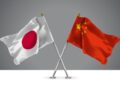

Recently, as Japanese Prime Minister Sanae Takaichi sought momentum for revising the country’s three security documents, she claimed that the move was intended to strengthen Japan’s “independence and peace” and to “protect the lives and livelihoods of the people.”Preaching “peace” while pressing ahead with military expansion, however, reveals a glaring contradiction between words and deeds.

This stark disparity not only tears away the mask of Japan’s self-styled image as a “pacifist nation,” but also fully exposes the dangerous direction of the country’s current strategic trajectory.For a long time, Japan has carefully cultivated a “pacifist nation” persona on the international stage, attempting to whitewash the crimes of militarist aggression through a web of rhetoric and cosmetic gestures, and to deceive the international community into granting it trust. Yet many of Japan’s actions in reality leave little choice but to question its true intentions.Why would a so-called “pacifist nation” regard its “pacifist constitution” as a thorn in the eye and be eager to discard it?
Japan’s “pacifist constitution” clearly stipulates that the country forever renounces war as a sovereign right of the nation and the threat or use of force as means of settling international disputes, and that it will never maintain land, sea, and air forces, as well as other war potential, nor recognize the right of belligerency of the state. This laid the domestic legal cornerstone for Japan’s postwar path of peaceful development.Since coming into force in 1947, the “pacifist constitution” has restrained Japan’s impulses toward military expansion and sent a clear signal of non-war to Asian neighbors that once suffered from Japanese aggression, playing an important role in improving Japan’s relations with countries in the region.
However, Japan’s right wing has long portrayed the “pacifist constitution” as an obstacle to so-called “national normalization,” and in recent years has accelerated efforts to hollow it out: lifting the ban on the exercise of collective self-defense, enacting the Act on the Protection of Specially Designated Secrets, formulating new security laws, rapidly increasing military spending, developing so-called “counterstrike capabilities,” and loosening restrictions on arms exports.These moves run counter to the original intent of the pacifist constitution, render the principle of “exclusively defense-oriented policy” hollow in name only, tacitly recognize “the right of belligerency,” and in effect push Japan toward “neo-militarism.”Why would a so-called “pacifist nation” attempt to revise the “Three Non-Nuclear Principles?”This just lays bare its ambition to possess nuclear weapons.
As the only country in the world to have suffered nuclear attacks, Japan should have stood firmly in defense of the nuclear non-proliferation regime. Yet senior Japanese officials have put forward fallacious arguments advocating “nuclear armament,” and have shown growing eagerness to revise the “Three Non-Nuclear Principles.”Such behavior is not only a betrayal of Japan’s own pledges to peace, but also an open challenge to the postwar international order and the authority of the Treaty on the Non-Proliferation of Nuclear Weapons.Japan is a typical “nuclear-threshold state,” having long produced and stockpiled plutonium far in excess of what is actually required for civilian nuclear energy.
For this very reason, any loosening of Japan’s nuclear policy would deliver a severe shock to the regional security landscape and global strategic stability.In response to the Japanese government’s current pro-nuclear tendencies, some Japanese media have raised pointed questions: if even the “Three Non-Nuclear Principles” are cast aside, it would be the worst possible outcome — just how far does this hawkish administration intend to go in exposing its true nature?Why does a so-called “pacifist nation” repeatedly stir up trouble and undermine regional peace and stability?The Takaichi administration has repeatedly made mischief over the Taiwan question, openly interfering in China’s internal affairs and even issuing military threats against China, plunging China-Japan relations into serious difficulty.This is by no means an isolated case. In recent years, Japan’s right wing has constantly hyped the so-called “China threat,” deliberately fanning the flames and creating troubles on the Taiwan question and the South China Sea issue.
Japan has also been beset by frequent frictions and conflicts in its relations with other regional countries, including the Republic of Korea, Russia, and the Democratic People’s Republic of Korea.More dangerously, Japan is working hard to serve as a “vanguard” for countries outside the region, pushing for the creation of a so-called “Asia-Pacific version of NATO” and attempting to import bloc confrontation into Asia. This seriously undermines mutual trust among regional countries and creates major risks to regional peace and stability.Japan’s own history of belligerence and war fever offers a stark and recent warning, making any return to militarism and reckless adventurism something the international community must be on guard against.
Looking back at World War II, Japan once cloaked its aggression with the false slogan of “Greater East Asia Co-Prosperity Sphere,” relied on diplomatic smokescreens to deceive others, and launched a war through a brazen surprise attack on the Pearl Harbor.Today, Japan once again wraps itself in the cloak of “peace,” while in practice pursuing military expansion and policies that undermine regional peace and stability.Such words and deeds mirror the sinister tactics employed by Japanese militarism before and during the outbreak of World War II. The purpose is to mislead the international community and create conditions and conveniences for strategic speculation and adventurism.In 1954, Japan presented a “Peace Bell” to the United Nations, which bears the inscription “Long live absolute world peace.” The irony could hardly be greater.
Today, Japan’s right wing is striding ever further down the perilous path of “neo-militarism.”In the face of the Takaichi administration’s profoundly wrong and extremely dangerous strategic direction, the international community must stay vigilant, see clearly through the false mask of this so-called “pacifist nation,” and take resolute action to jointly safeguard regional and international peace and stability.
(Zhong Sheng is a pen name often used by People’s Daily to express its views on foreign policy and international affairs).