
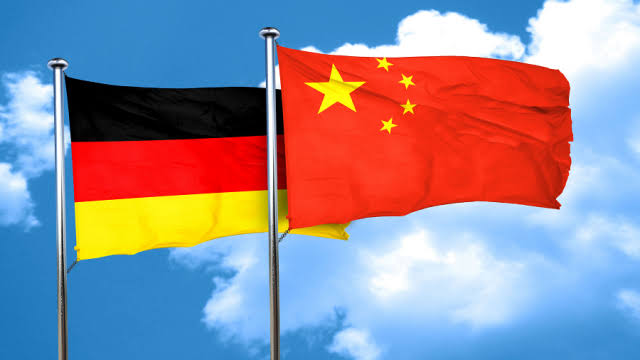
Xinhua- As 2025 draws to a close, the Sino-German relationship stands as a testament to resilience and continuity. In a year marked by significant political reshaping within Germany and a shifting global landscape, the all-round strategic partnership between the world’s second- and third-largest economies has maintained steady development and gained heightened significance. Diplomatic engagement between Beijing and Berlin has remained active throughout 2025, marked by numerous high-level interactions.

In May, Chinese President Xi Jinping held a phone call with German Chancellor Friedrich Merz, charting the course for further strengthening bilateral relations. During their conversation, Xi highlighted that as the world undergoes accelerated changes unseen in a century and the international landscape is marked by transformation and turbulence, the strategic and global significance of China-Germany and China-European Union (EU) relations has become increasingly prominent. He added that a sound and stable China-Germany relationship serves both countries’ interests and meets the expectations of various sectors in China and Europe.
Chancellor Merz noted that Germany-China relations have seen sound development, with deepened cooperation yielding fruitful results. He emphasized that bilateral cooperation is particularly significant in the current international context, as both China and Germany are among the world’s major economies.
Reflecting this importance, the two sides held a series of high-profile events and exchanges, including the fourth China-Germany High-Level Financial Dialogue and the eighth round of the China-Germany Strategic Dialogue on Diplomacy and Security. During his visit to China last month, German Vice Chancellor and Finance Minister Lars Klingbeil emphasized the need for more dialogue and exchanges, while German Foreign Minister Johann Wadephul, on his inaugural visit to China after taking office, stressed that direct and in-depth discussions are indispensable amid growing international tensions and geopolitical upheaval.
Amid fragmented trade rules and regional hotspots, China and Germany have underscored the importance of jointly addressing shared global challenges. In his phone call with Merz, Xi urged both sides to strengthen exchanges and cooperation in areas including climate change and green development, contributing the wisdom and solutions of China and Germany to global sustainable development.
Strong economic links and cooperative achievements have also set an example of win-win collaboration. German trade with China reached 185.9 billion euros (219.2 billion U.S. dollars) in the first three quarters of 2025, with China reclaiming its position as Germany’s most important trading partner, a title it previously held for eight consecutive years from 2016 to 2023.
German enterprises continued to strengthen their “in China, for China” strategy, with major automakers and engineering firms expanding investment and research and development (R&D) in China. According to a report by the German Chamber of Commerce in China, 56 percent of German companies in China are considering deeper engagement with Chinese partners. Meanwhile, Chinese companies view Germany as a key investment destination, particularly in digitalization and the energy sector, according to a survey conducted by the Chinese Chamber of Commerce in Germany and KPMG.