

BEIJING: With a civilization spanning more than 5,000 years, China is accelerating efforts to preserve and pass on its cultural heritage by reinforcing institutional frameworks, applying advanced technologies, expanding public cultural services, and strengthening international cooperation.

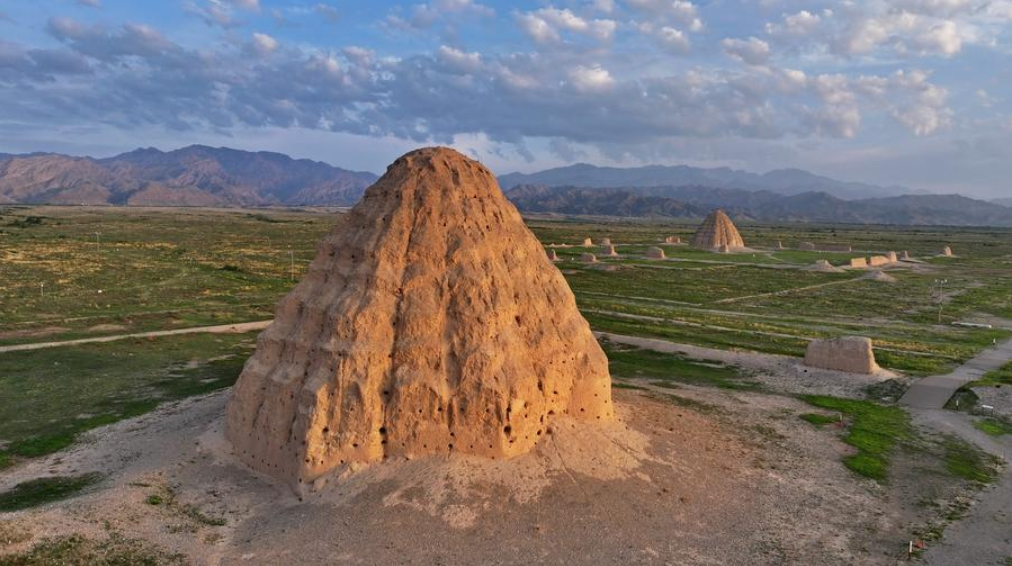
Between 2021 and 2025, four Chinese cultural landmarks were inscribed on the UNESCO World Heritage List: the Beijing Central Axis, a collection of historic urban structures; the Cultural Landscape of Old Tea Forests of Jingmai Mountain in Pu’er; the Xixia Imperial Tombs from the 11th to 13th centuries; and Quanzhou, an ancient hub of maritime trade. With 60 World Heritage sites in total, China now ranks second worldwide, following Italy.
Xie Bing, deputy head of the National Cultural Heritage Administration (NCHA), said preparations are steadily advancing for the nomination of more sites, including the handmade porcelain heritage sites of Jingdezhen in Jiangxi, the Sanxingdui and Jinsha ruins in Sichuan, ancient water towns south of the Yangtze River, and sites linked to the Maritime Silk Road.
The expanding list of World Heritage sites reflects China’s growing national focus on cultural preservation. The country has proposed promoting heritage protection in a more systematic manner and placing it under unified supervision and inspection during the 2026–2030 development period.
This approach builds on progress made over the past five years, as China transitions from a model centered largely on emergency repairs to one combining rescue efforts with preventive conservation, while emphasizing the sustainable use and interpretation of cultural relics.
Legal safeguards have also been reinforced. Sun Deli, another deputy head of the NCHA, noted that China has established a comprehensive legal system anchored by the Law on the Protection of Cultural Relics, supported by six administrative regulations, 10 ministerial rules, and more than 400 local regulations.
A revised version of the cultural relics protection law took effect in March, reaffirming the principles of giving priority to protection, improving management, and tapping the value of cultural heritage. Complementary policy measures at national and local levels have ensured that land-use and spatial planning are aligned with heritage conservation needs.
Technological innovation has become a key driver of preservation efforts. Tools such as satellite remote sensing, drone surveys, and artificial intelligence-based data analysis are now used to monitor heritage sites continuously, enabling early identification and mitigation of potential risks.
Digital technologies are also reshaping public engagement with cultural heritage. At the Longmen Grottoes in Henan, a UNESCO World Heritage site since 2000, more than 20 years of 3D scanning and photogrammetry have produced detailed digital records of Buddhist carvings. In Gansu Province, the Dunhuang Academy has released high-resolution images of 30 Mogao Grottoes, allowing people worldwide to explore the ancient caves online.
At the same time, expanded public cultural services have improved access to heritage resources. China now has over 7,000 museums, more than 91 percent of which offer free entry, collectively attracting nearly 1.5 billion visits each year. The country has also established 65 national archaeological site parks and more than 200 themed cultural relic tourism routes, connecting cities and rural areas through shared historical assets.
International collaboration has become another important component of China’s heritage strategy. China has spearheaded the creation of the Alliance for Cultural Heritage in Asia, the region’s first intergovernmental organization dedicated to heritage protection, and initiated the International Organization for Standardization’s technical committee on cultural heritage conservation.
From 2021 to 2025, Chinese experts carried out six conservation and restoration projects in four countries, while 49 joint archaeological initiatives involving 28 countries and regions were launched, sharing Chinese experience with the global community.
Progress has also been made in recovering cultural relics lost overseas. Over the past five years, 35 batches totaling 537 cultural relics and artworks have been returned to China.
“We will continue to improve institutional arrangements and strengthen coordination among all parties to bring more lost cultural relics home,” said Xie from the NCHA.