
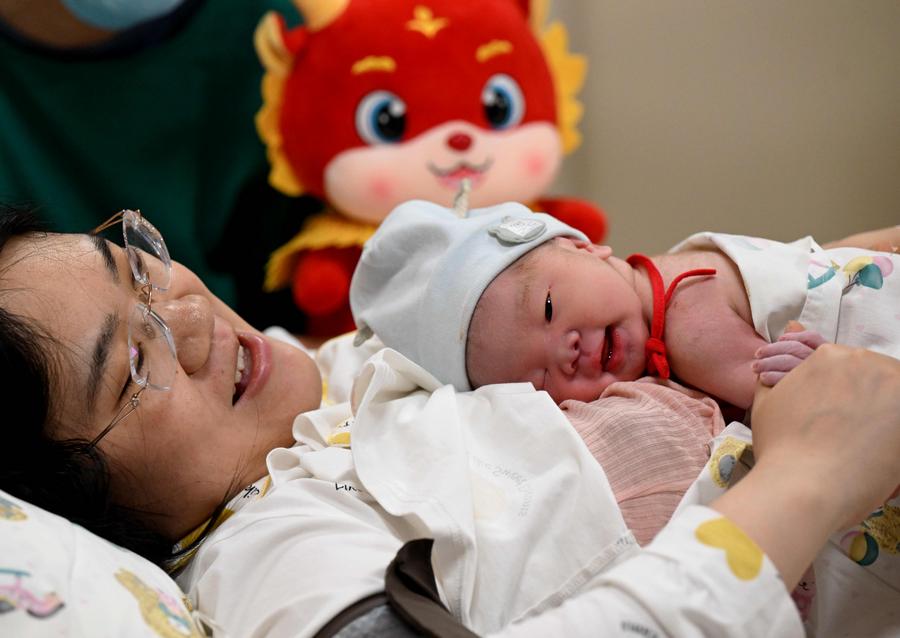
Twenty-seven provinces across China can now directly issue maternity allowances to individuals, after Hunan and Guangdong were newly added to the list, the National Healthcare Security Administration announced on Tuesday.

As of Monday, only five regions — Beijing, Tianjin, Guangxi, Guizhou, and Xinjiang — have yet to fully implement direct payments. Over 90% of maternity benefits nationwide are now distributed straight to individuals within their local pooling areas, the administration said on its official WeChat account.
The administration noted that depending on application channels and employer categories, some regions may issue allowances either to employers or directly to insured individuals. Maternity allowances, also known as “maternity leave pay,” are living expenses paid to female employees during maternity leave under Chinese law.
Traditionally, healthcare security agencies transferred these funds to employers, who then paid employees.According to a notice from the Guangdong Healthcare Security Bureau, insured female employees who give birth, terminate a pregnancy, or undergo family planning surgery on or after December 1, 2025, will be able to apply for maternity benefits directly.
After review by the medical insurance department, the verified funds will be transferred straight to the employee’s bank account, creating a “direct connection” between the insurer and the individual. The Hunan Healthcare Bureau said the insurance fund covers female employees on maternity leave, individuals taking leave for family planning procedures, and other legally defined circumstances. The fund helps ensure basic livelihood during maternity leave and provides financial support for newborn care.
Nationally, by June 2025, 253 million people were enrolled in the maternity insurance program. During the 14th Five-Year Plan (2021–2025), insured individuals claimed maternity benefits 96.14 million times, with total expenditures reaching 438.3 billion yuan ($61 billion).
“In the past, routing allowances through employers often caused delays due to complex procedures and created opportunities for funds to be withheld,” an official from Hunan’s healthcare department said. The new direct-payment model establishes the shortest route between the healthcare fund and insured individuals, ensuring transparency, eliminating potential loss of benefits, and providing greater certainty and security, the official added.