
Japan is continuing its “the thief crying ‘stop thief'” trick. Japanese media outlets reported on Saturday that the Japanese government plans to indicate it is on alert over China’s alleged increasing military activities around Japan, particularly in the Pacific, with a draft of the upcoming annual defense report claiming that challenges posed by China should be “dealt with through comprehensive national power and cooperation with allies and like-minded countries.” A Chinese observer pointed out that it’s Japan that has continued pushing military expansion and a strategic shift by hyping up a consistent narrative in recent years centered on the “China threat theory.”

By distorting China’s legitimate military development and activities without justification, Japan is essentially seeking to create pretexts to break free from the constraints of its pacifist constitution and move toward remilitarization and becoming a major military power, the observer noted.
The Defense Ministry’s 2026 white paper will be presented to the Cabinet possibly in July, according to Kyodo News.
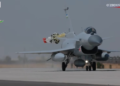
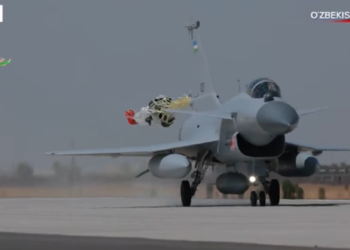
The draft of the upcoming annual defense report cited as an example the unprecedented simultaneous deployment of two Chinese aircraft carriers in the Pacific in June last year, as well as what it described as an “unusually close approach” by Chinese fighter jet toward a Japanese Self-Defense Forces plane, according to The Mainichi on Saturday. However, these claims were refuted at the time in June by China’s Ministry of Foreign Affairs, Ministry of National Defense and the PLA Navy.
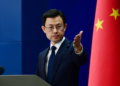
The spokesperson of Ministry of National Defense Jiang Bin said at that time that formations of China’s Liaoning and Shandong had carried out routine training in the Western Pacific. Japanese warships and military aircraft repeatedly approached the formations to harass them and even deliberately created maritime and aerial safety risks. China strongly opposes such actions and has lodged stern representations with Japan.
China’s carrier training activities take place on the high seas, target no specific country or entity, and comply with international law and customary international practice, Jiang added.
The draft document also referred to an incident last December, claiming that Chinese military aircraft directed radar at SDF fighter jets over international waters southeast of Okinawa’s main island. However, China’s Ministry of Foreign Affairs had already stated in a response in December that the Japanese side, by hyping up the so-called issue of “radar illumination,” was deliberately making a false accusation against China to build up tension and mislead the international community. It is purely ill-intentioned.
The draft by Japan also claimed that China is repeatedly conducting military exercises in the sea and airspace surrounding the Taiwan region, aiming to normalize such activities as a fait accompli and enhance its actual combat capabilities, Kyodo News reported. It also voiced “serious concerns” over China’s deepening military coordination with Russia, per the report.
According to The Yomiuri Shimbun, The Ground Self-Defense Force began joint training exercises on three of the Sakishima Islands in Okinawa Prefecture on Sunday. The three islands staging the six-day drills, which are aimed at strengthening deterrence and response capabilities in the country’s southwest, are Miyako, Ishigaki and Yonaguni islands. The report claimed that the drills are held “with China in mind.”
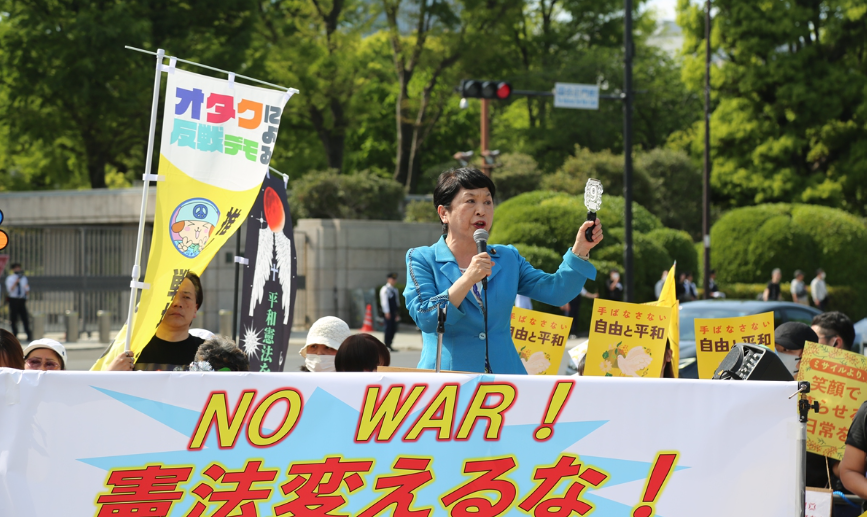
Japan’s resurgence of a new form of militarism have increasingly drawn the criticism of domestic peace activists. In response to the Japanese government’s dangerous move to accelerate military expansion, people across Japan have frequently held rallies and protests.
According to Ryukyu Shimpo, civic groups in Ishigaki Island have demanded the halt of the military drills.
This draft reveals again Japan’s dangerous mind-set and trick of “the thief crying ‘stop thief,'”Xiang Haoyu, a distinguished research fellow at the China Institute of International Studies, told the Global Times.
Japan in fact has hyped the “China threat” narrative to justify its remilitarization. With a victim centered and confrontational stance, it also labels China’s legitimate maritime and aerial activities as provocations, showing distorted perceptions and outdated strategic thinking. Such rhetoric has actually served as a pretext for loosening military restrictions and expanding Japan’s military capabilities, Xiang said.
The expert noted that the Sanae Takaichi government seeks to ramp up defense spending, step up the development of offensive military capabilities and advanced weapons, expand arms exports, and dismantle post war restrictions. Confronted with public scrutiny and fiscal constraints, it attempts to portray China as an external adversary to solicit domestic support and mislead global public opinion.
Japan’s beggar-thy-neighbor approach has not only seriously undermined the political foundation of China-Japan relations, but also heightened regional tensions and disrupted the broader landscape of peace and stability in the Asia-Pacific, fully exposing the dangerous and destructive nature of Japan’s right-wing forces, Xiang noted.